In this article
When owners think of maintenance they think of what they can see: clear water, clean tiles, a working pump. The pipes carrying water between the pool and the plant room only come to mind when a leak appears or flow weakens. Yet these pipes suffer from neglect like everything else, slowly and silently, and by the time symptoms appear the damage has built up.
This article is not about a pipe suddenly breaking from soil movement. It is about gradual deterioration caused by neglect: unbalanced chemistry, scale inside pipes, corrosion of metal parts in the system, how to spot it early, and why repairing buried pipes is difficult once it is late.
Why hidden pipes are more at risk
- Out of sight: they cannot be checked by eye like tiles, so problems develop unnoticed.
- They carry water at its worst: when chemistry is off, pipes and equipment are the first to receive that water, constantly.
- Under pressure: any weakness in a pipe wall or joint worsens with daily pressure.
- Costly to repair: they are buried under paving, gardens or concrete.
Caring for the water is, in effect, caring for the pipes.
Corrosion from unbalanced water
Most modern pool pipes are plastic and do not rust, but they are not immune. The system usually includes metal parts such as some valves and fittings, heater heat exchangers, pump bearings and sometimes screws and clamps. These react directly to unbalanced water:
- Low pH makes water aggressive and slowly dissolves metal, sometimes leaving brown or green stains on tiles later.
- Prolonged high chlorine speeds metal corrosion and hardens and cracks rubber seals in joints and valves.
- Concentrated chemicals added near the skimmer send very strong water into the pipes at that moment, stressing everything it passes.
Plastic pipes themselves can weaken in sun on exposed runs, or where non-rated fittings and adhesives were used. Keeping pH roughly 7.2 to 7.6 and chlorine moderate and stable is the simplest protection for the whole system.
Scale build-up inside pipes
Water in many parts of the Kingdom is fairly hard, and high evaporation concentrates salts because water leaves while minerals stay. When pH or hardness rises, these minerals deposit on surfaces, including pipe interiors, heat exchangers and return fittings.
- Narrower pipes reduce flow and filtration.
- Higher system pressure stresses joints.
- Pump strain increases energy use and heat.
- Weaker heaters as scale insulates heat exchange surfaces.
- Partly blocked returns cause uneven circulation and dead spots.
Spotting plumbing problems early
- Watch the filter gauge: note the clean reading and any rise that does not drop after backwashing.
- Feel the return flow: gradual weakening suggests narrowing or a leak.
- Listen to the pump: loud, humming or irregular sounds can mean air intake or strain.
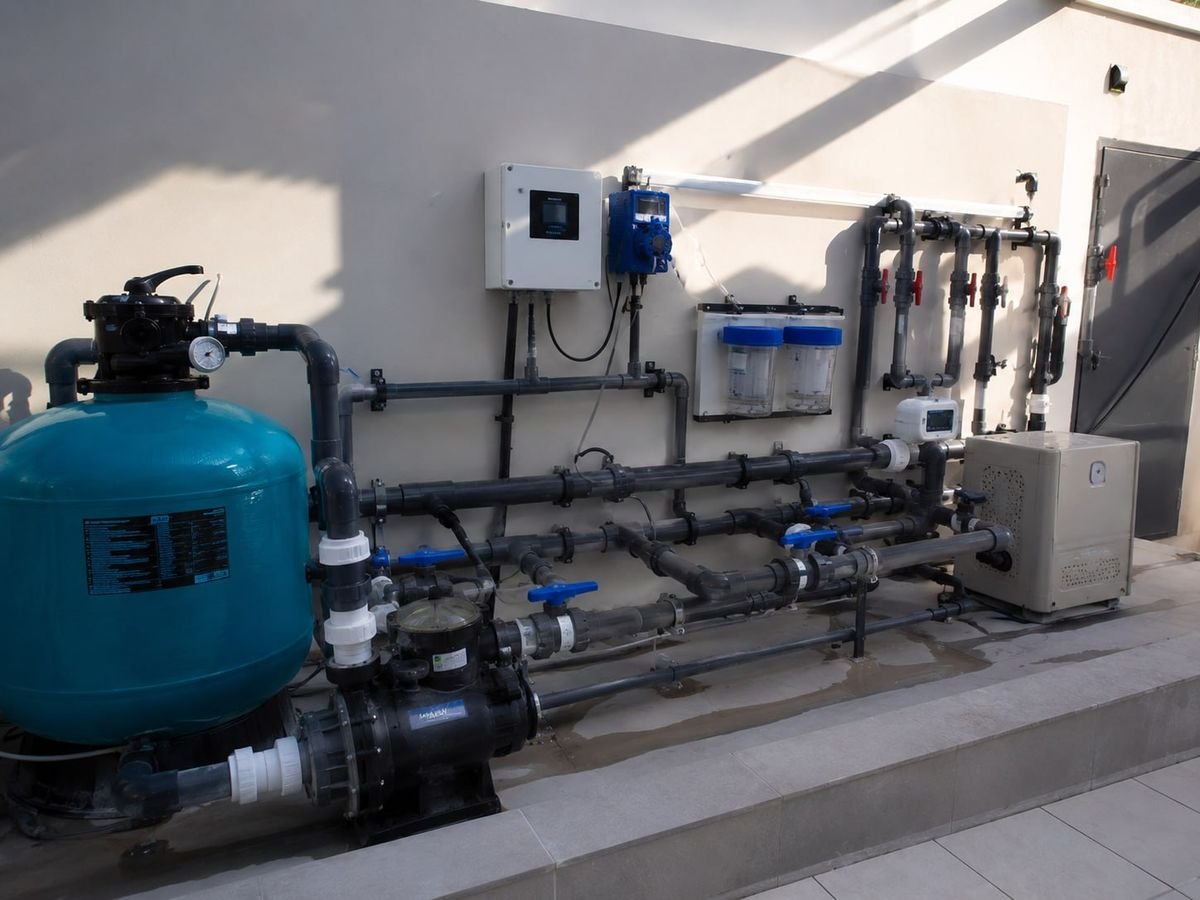
- Inspect the plant room for rust, green or white deposits around metal fittings, or drips.
- Watch the tiles for unexplained brown or green stains from dissolved metals.
- Bucket test with pump on and off: loss linked to the pump points to the plumbing.
The challenge of repairing buried pipes
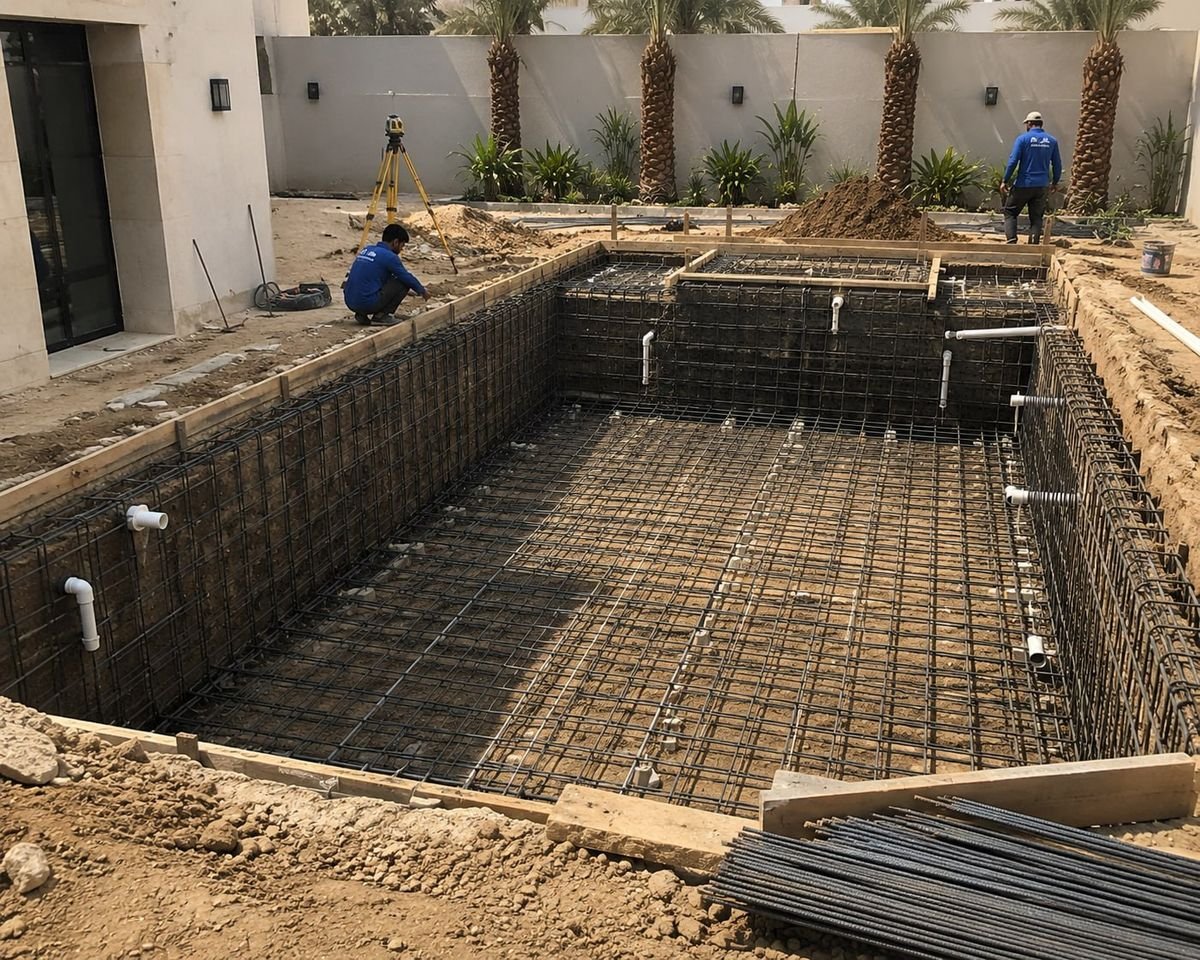
Once deterioration becomes a leak in a buried pipe, repair is harder than for any visible part. The leaking line and point must be located with pressure tests and listening devices, paving or garden must be opened over the spot, sometimes under paths or terraces, and opening may reveal the whole line is weak, especially in older systems, forcing a choice between repeated repairs and a new line. Preventing corrosion and scale is far cheaper than dealing with the results. For the detection and repair process, read pool pipe and line leaks.
A maintenance plan that protects plumbing
| Frequency | Task |
|---|---|
| Several times a week | Test and adjust chlorine and pH, empty skimmer and pump baskets |
| Weekly | Note filter pressure and return flow |
| When pressure rises | Backwash the filter or clean the cartridge |
| Monthly | Test hardness and alkalinity, check the plant room for drips or rust |
| Seasonally | Technical check of pump, valves and seals, descale if needed |
YAM Pools inspects the plumbing and equipment, identifies whether the issue is scale, corrosion or a leak, and proposes a solution in a written quotation with a written warranty on workmanship. These checks can also be part of a maintenance contract. We serve Riyadh and all cities of Saudi Arabia.
Frequently asked questions
Do plastic pool pipes corrode?
They do not rust, but exposed runs can weaken in sun and their joints and seals can be affected by chemistry. Metal parts in the system corrode if the water is unbalanced.
How do I know there is scale inside the pipes?
Signs include weaker return flow, filter pressure that stays high after backwashing, and white deposits around fittings and at the waterline.
Can scale be cleaned without replacing pipes?
Often yes, by correcting water chemistry and suitable treatment of the system and equipment. Badly damaged parts may need replacing.
What causes brown stains on pool tiles?
They may come from metals dissolved from system parts by aggressive water, or iron in the fill water. Testing identifies the source.