In this article
The filter is the part of a pool nobody sees, which is exactly why it gets forgotten. Homeowners notice water colour and clean tiles, but rarely open the plant room to look at the pressure gauge. A neglected filter does not fail overnight. It tires gradually and drags the pump, the pipework and water quality down with it. This article compares two paths: steady routine maintenance, and neglect that usually ends with replacing a large part of the system.
How filtration works and why neglect hurts it
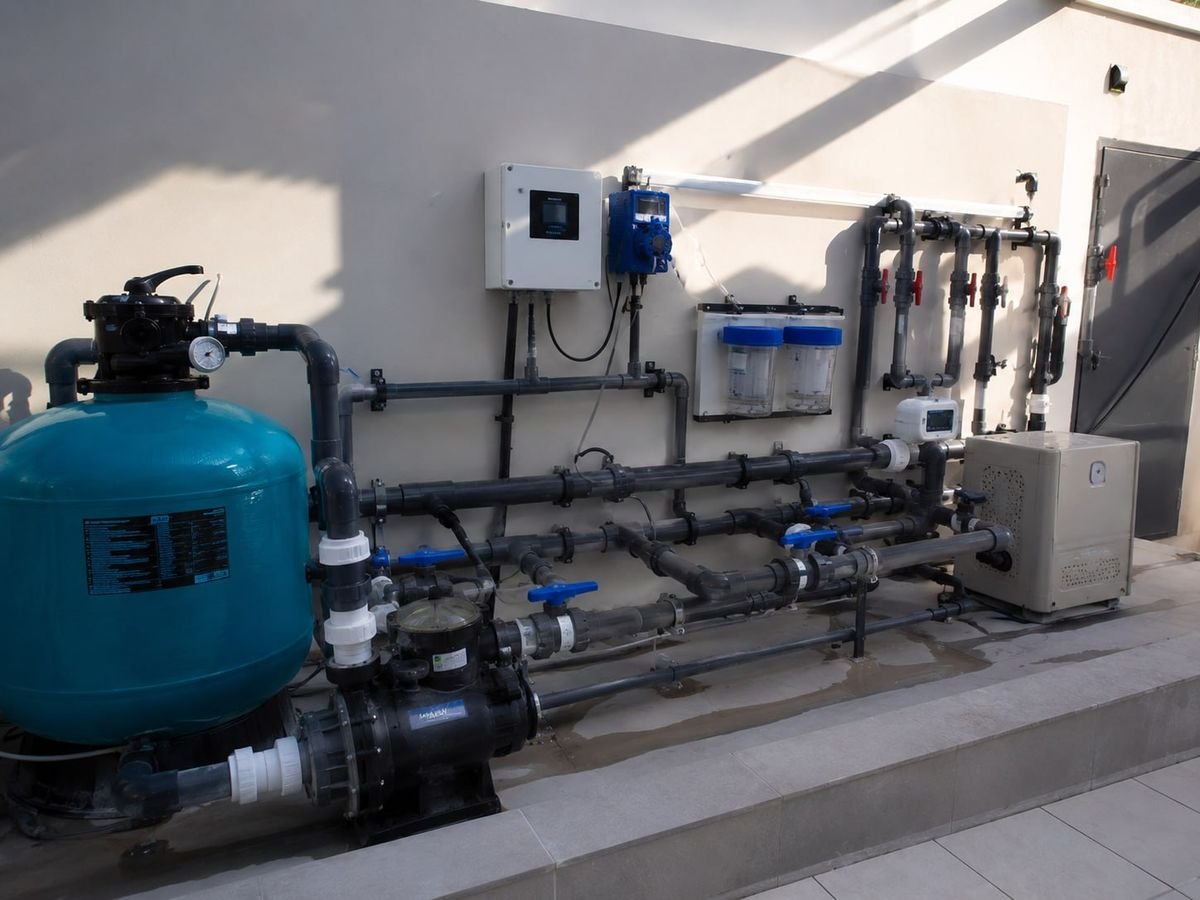
The pump draws water from the pool, the filter traps debris and the return lines send clean water back. Common filter types in villa pools:
- Sand filters: a tank of graded media cleaned by backwashing.
- Cartridge filters: a removable element washed by hand and replaced when worn.
- Specialist media filters: finer filtration that needs closer care.
Whatever the type, dirt builds up inside. If it is not removed regularly, the filter becomes an obstruction instead of protection. Riyadh dust and sandstorms fill filters faster than in less dusty climates.
Signs your filter is struggling
- Higher gauge pressure than your usual post clean reading, the clearest sign of clogging.
- Weak flow from the return jets in the pool walls.
- Cloudy water even though chemistry is balanced.
- Sand on the pool floor with sand filters, often pointing to damaged internals.
- Leaks around the filter lid or valves.
- A different pump sound as it works against extra resistance.
Routine filter maintenance tasks
- Check the pressure gauge at least weekly.
- Backwash sand filters when pressure rises, without overdoing it, as that wastes water.
- Hose down cartridges and inspect them for tears or distortion.
- Empty the pump basket and skimmer baskets.
- Inspect O rings, seals and valves for drying or cracking.
- Replace the filter media when it loses efficiency, based on use and water condition.
The neglect chain: how a small fault grows
- The filter slowly clogs and pressure climbs.
- The pump works harder, runs hotter and draws more power.
- Circulation weakens, leaving dead zones where algae grow.
- More chlorine is added to compensate, raising chemical spend and stressing tiles and fittings.
- High pressure strains valves and joints, and plant room leaks begin.
- Eventually the filter fails internally and the pump follows, so the answer becomes replacement, not maintenance.
This is why the bill for neglect is far larger than a new filter. You end up paying for a filter, a pump, extra chemicals, algae cleaning and possibly leak repairs.
Long term cost difference
Exact figures depend on the system and pool size, but the nature of spending on each path is clear:
| Item | With routine care | With neglect |
|---|---|---|
| Filter | Regular cleaning, media changed when needed | Internal damage, often full replacement |
| Pump | Normal workload | Strain, heat, motor and seal faults |
| Chemicals | Stable, predictable use | Rising use to offset poor filtration |
| Electricity | Moderate | Higher due to resistance |
| Water quality | Clear and stable | Cloudiness, algae, repeated shock treatments |
| Downtime | Rare and short | Pool out of use until the new unit is fitted |
Routine care is a small, planned expense. Neglect is a large, sudden one that tends to arrive in peak summer, when you need the pool most.
When replacement is the right call
- The filter tank itself is cracked or leaking.
- Internals are damaged and spare parts for the model are hard to find.
- The filter was undersized for the pool and pump from the start, which is common in older villas.
- A pump or system upgrade is planned soon, so upgrading as one package makes sense.
If your pool is older and you are considering a wider upgrade, see our guide to upgrading filtration and lighting in older villa pools.
Suggested filtration maintenance schedule
| Frequency | Task |
|---|---|
| Weekly | Read the gauge, empty baskets, check return flow |
| When pressure rises | Backwash sand filter or wash cartridge |
| After sandstorms | Inspect and clean the filter straight away |
| Each season | Check seals, valves and joints |
| As media wears | Replace sand or cartridge on technician advice |
YAM Pools offers filtration checks and maintenance contracts covering the filter, pump and water quality, with a clear condition report for each part. We serve Riyadh and cities across the Kingdom.
Frequently asked questions
How do I know the pool filter needs cleaning?
The clearest sign is a gauge reading above your usual post clean figure. Weak return flow and cloudy water are extra clues.
Is frequent backwashing good for the filter?
Overdoing it wastes water and can reduce sand efficiency, since a light layer of debris helps trapping. Backwash when pressure has actually risen.
Does a neglected filter affect the pump?
Yes. A clogged filter forces the pump to work against higher resistance, so it runs hotter, uses more power and wears out early.
When should I replace rather than repair the filter?
When the tank is cracked, internals are damaged with no spare parts available, or the filter is undersized for the pool. A technician confirms this after inspection.