In this article
Plumbing is the part of a pool you never see once it is finished, yet it works every single day. Water leaves the pool, passes through the pump and filter and returns. Any weakness in pipes or joints underground means a hard-to-reach leak, weak pressure or a pump that struggles for no obvious reason. In Riyadh the challenge is greater, because exposed pipes in the plant room or on the roof face intense heat and direct sun. This guide focuses on the materials: what to choose, what to avoid and how to check what is going into your pool.
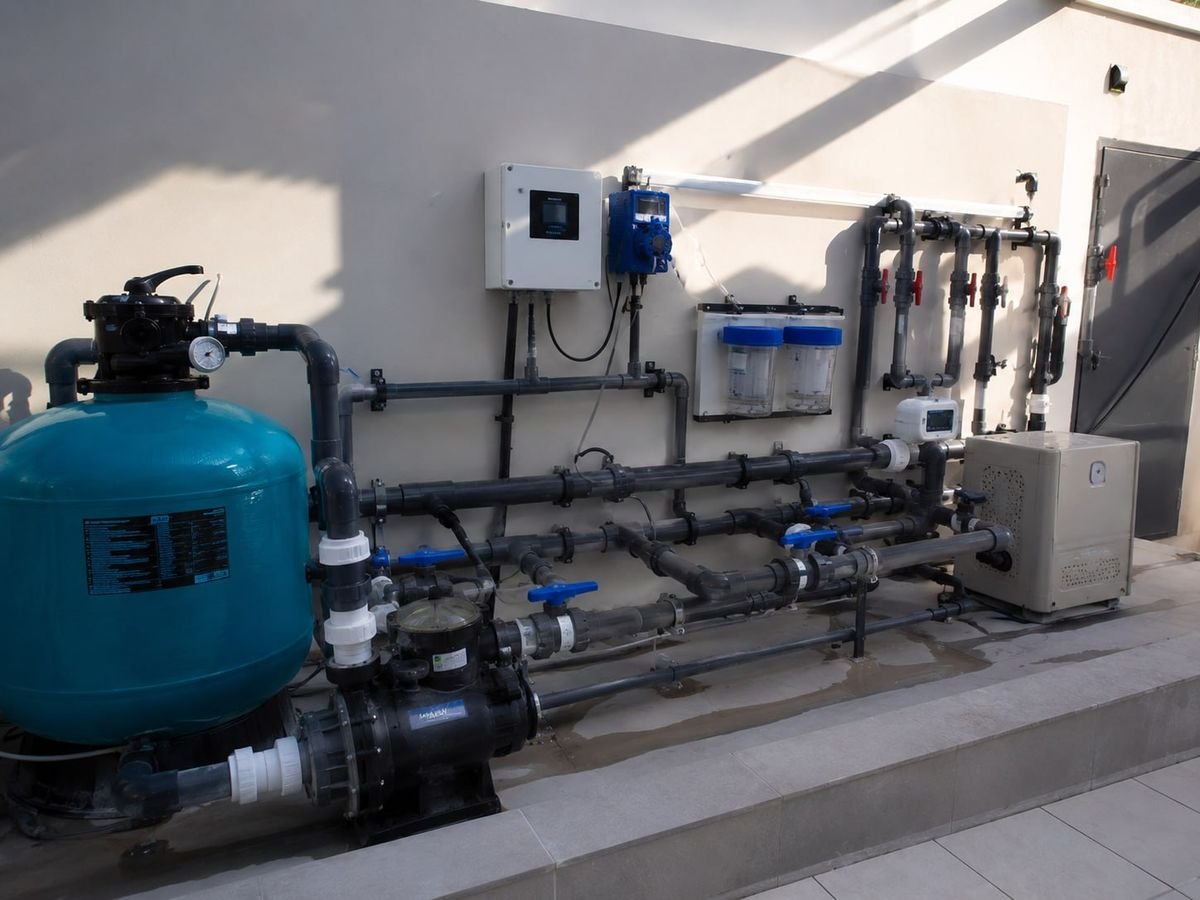
The parts of the water circuit
- Suction points: the skimmer at the surface and the main drain at the bottom.
- Suction line: from those points to the pump, working under negative pressure.
- Pump and hair basket: the heart of the system.
- Filter and its valve: sand or cartridge, depending on the design.
- Return line: from the filter back to the wall inlets, under positive pressure.
- Valves and fittings: to direct flow and isolate equipment for servicing.
Every one of these needs a material that handles chlorine, pressure and heat at the same time.
Pipes: pressure rating matters more than looks
Pools normally use plastic pressure pipe, such as PVC with a wall thickness suited to the operating pressure, because it does not rust and copes with chlorinated water. A mistake we often see is thin-walled drainage pipe used on pressure lines because it is cheaper or easy to find. It may work for a while, but heat and constant pressure eventually crack it at the joints or deform it.
- Make sure the pipe is pressure rated and marked with its rating.
- Size the diameter to the pump and the length of the runs. Undersized pipe raises resistance and strains the pump.
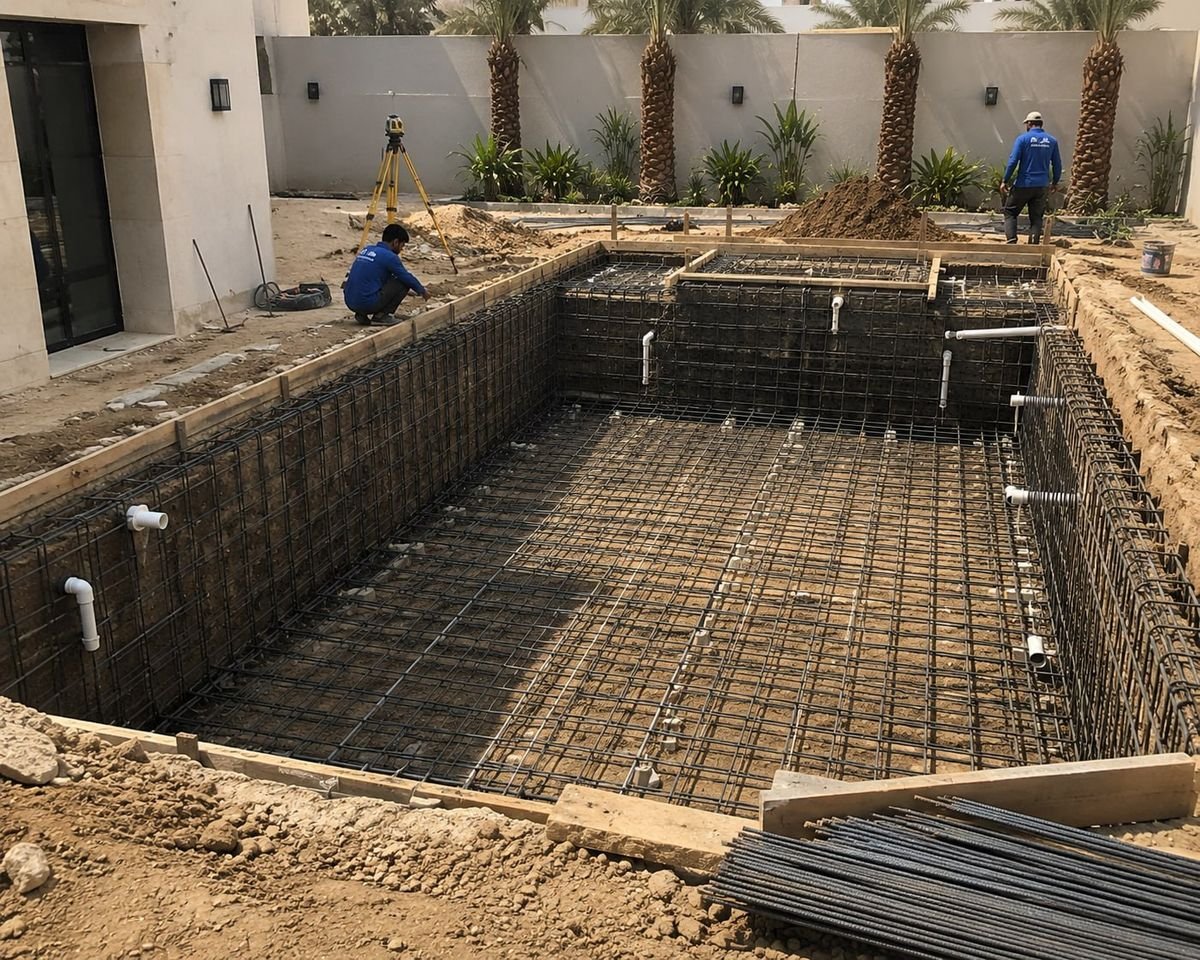
- Buried pipes need a sand bed and protection from sharp stones before backfilling.
- Pipes exposed to sun need UV protection through wrapping, suitable paint or shade.
Fittings and solvent welding
Most plumbing leaks come from joints, not the pipe. Elbows, tees and couplings are solvent welded, and if the cement is weak, the ends are not cleaned or the joint is not given time to set, it can separate under pressure later.
- Use fittings with the same pressure class as the pipe, and avoid mixing brands and ratings at random.
- Keep elbows to a minimum. Each extra bend adds resistance and a possible weak point.
- Where possible, keep key joints accessible rather than all buried under tiles.
Valves and the filter valve
Valves see repeated movement and treated water, so choose pool-grade valves with chlorine-resistant seals. The multiport filter valve is used for backwashing, and if its internal gasket is poor it can leak water to waste without you noticing, so the pool loses water with no visible leak. Fit isolation valves before and after the pump and filter so any unit can be serviced without draining the lines.
Choosing the filter
Most villa pools use sand or cartridge filters. Sand suits most homes, copes well with dust from sandstorms and is cleaned by backwashing. Cartridges give finer filtration and save backwash water but need more manual cleaning in dusty seasons. In both cases:
- The filter body should be UV resistant if it sits outdoors.
- Its size should match the water volume and pump flow, not much smaller or much larger.
- A clear pressure gauge is essential. It is the simplest way to know when cleaning is due.
The plant room and heat
A pump, filter and pipes in a closed, unventilated room during a Riyadh summer run very hot. That shortens motor life and weakens plastics. Keep the room ventilated and shaded, lay the pipes so joints are visible and reachable, and give the floor a drain for any leak. To see what happens to neglected pipework, read our article on pipe corrosion in neglected pools.
What to ask before the pour
- Pipe type, pressure rating and diameter on suction and return lines.
- Fitting type and solvent cement used.
- Will there be a documented pressure test before the pour?
- Plant room location, ventilation and protection for exposed pipes.
- Filter type and size, multiport valve and isolation valves.
- Does the written warranty cover plumbing and leaks?
Frequently asked questions
Can any PVC pipe be used for a pool?
No. Pool lines need pressure-rated pipe with suitable wall thickness. Thin drainage pipe does not cope with pressure and heat over time and tends to crack at the joints.
Why is the pressure test before the pour so important?
It reveals weak joints while they are exposed and easy to fix. After concrete and tiles, reaching them means breaking finishes at a much higher cost.
Sand or cartridge filter for Riyadh?
Sand suits most villas, handles dust and is cleaned by backwashing. Cartridges filter more finely but need more manual cleaning. The right choice depends on pool size and use.
My pool loses water while the filter runs. Is it the plumbing?
Possibly. A worn multiport gasket can send water to waste, or an underground joint may be leaking. A proper check of the circuit is better than guessing.