In this article
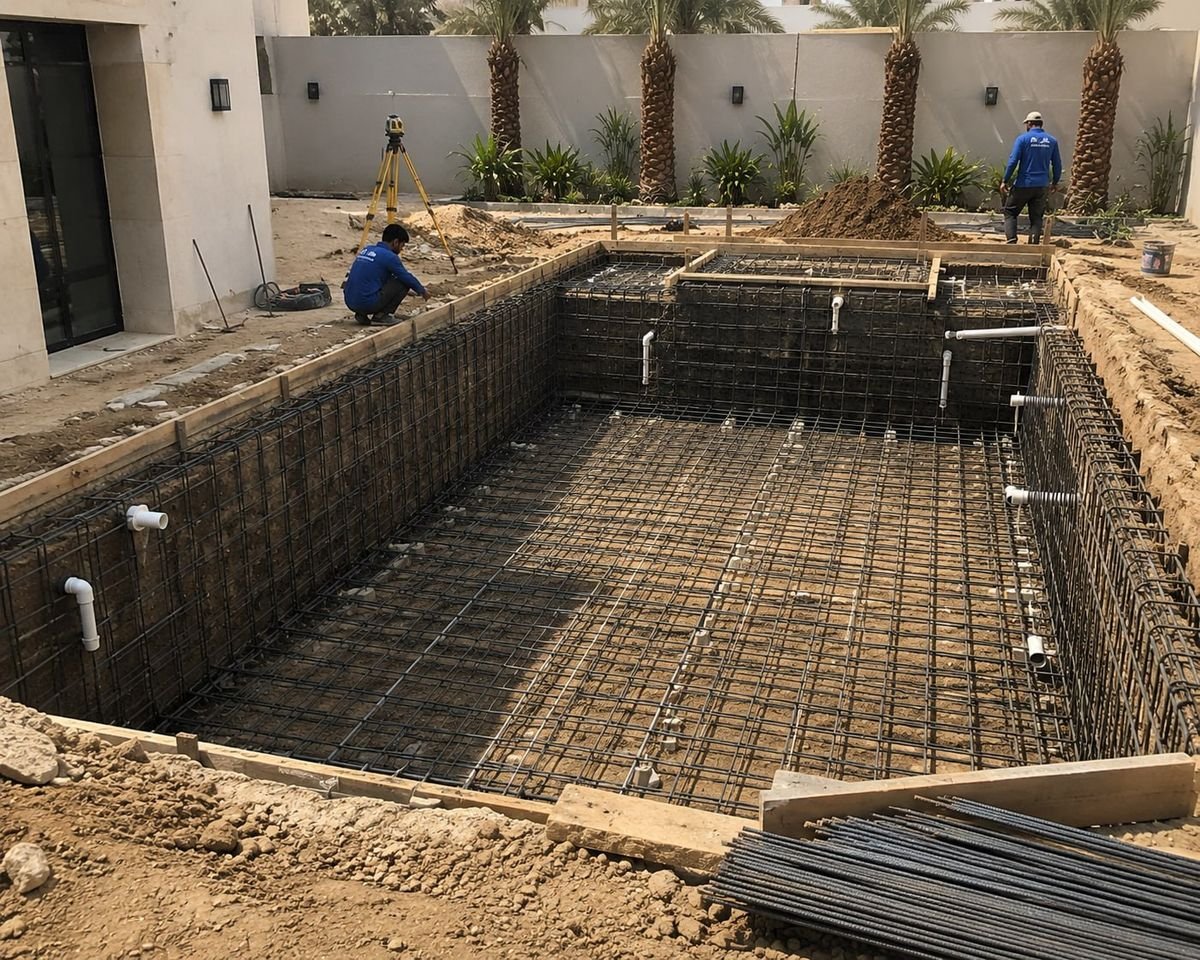
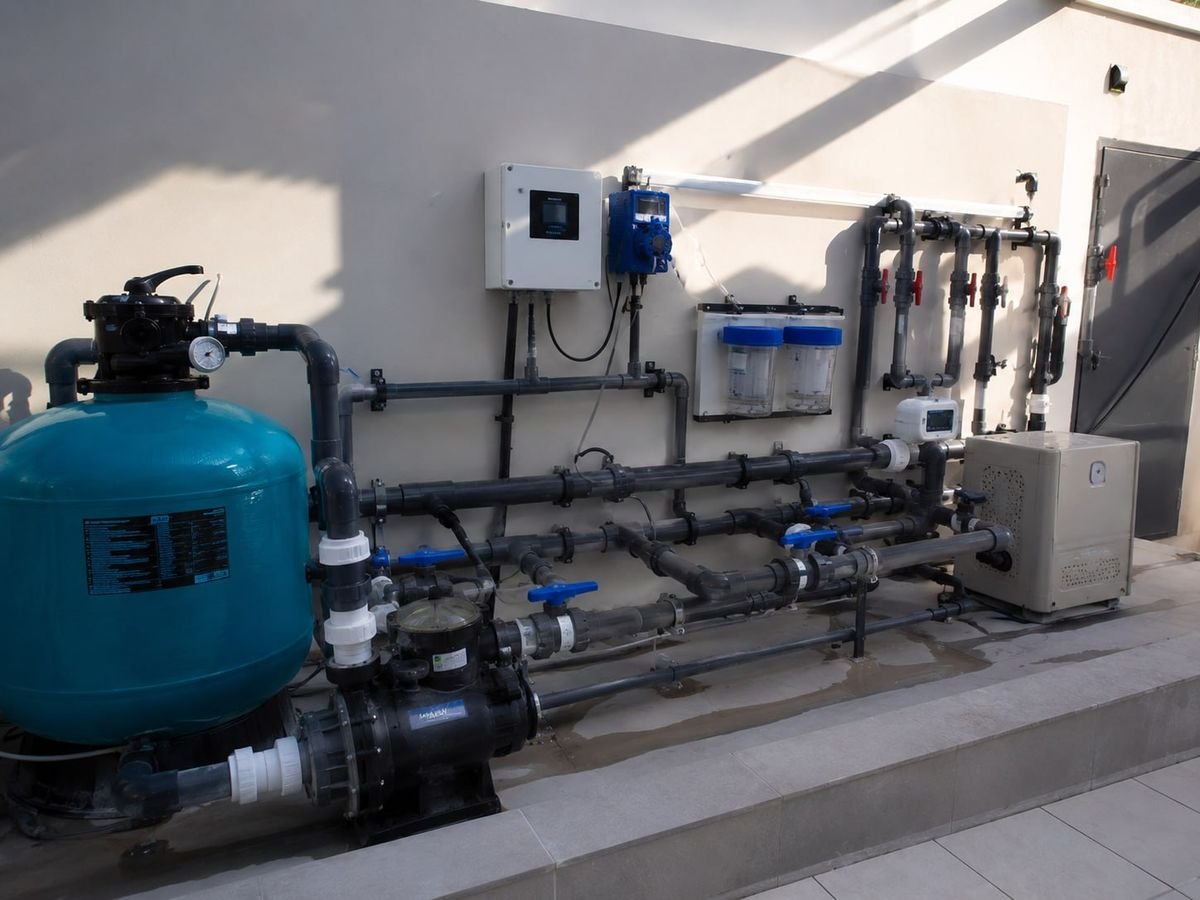
Pool water does not sit still in the basin. It circulates constantly through a pipe network from the floor and walls to the plant room and back after filtration. Much of that network is buried in the ground or cast in concrete and never seen after construction. That is why pipe leaks are among the hardest to detect and among the most confusing for owners, who see the water dropping but find no crack or obvious damp.
This article explains how the pipe network works, why lines and joints fail, how a technician locates a buried leak without random digging, how repair or replacement is done, and what reduces the chance of recurrence.
How the pipe network relates to leaks
- Suction lines draw water from the skimmer and main drain to the pump, under low or negative pressure while running.
- Pressure or return lines carry water from the pump through the filter and other equipment back to the pool through the returns, under positive pressure.
This difference matters for diagnosis. A broken pressure line leaks more when the pump runs. A broken suction line may draw air while running instead of leaking, showing bubbles at the returns or in the pump basket, then leak when the pump stops. Lines for water features, heaters or automatic fill add further possibilities.
Why pool pipes and joints fail
- Soil movement pulls or breaks joints, especially where a pipe enters the rigid pool shell.
- Unsuitable fittings or adhesives not rated for burial and pressure, or poor surface preparation when gluing.
- Excess pressure from an oversized pump or a clogged filter.
- Water hammer from closing valves suddenly while running.
- Tree roots seeking moisture can wrap around pipes or enter a weak joint.
- Loads above the line, such as vehicles over shallow pipes.
- Sun on exposed pipes in the plant room or on a roof.
- Age, as some joints and adhesives lose strength over time.
How buried pipe leaks are found
Step one: confirm it is the pipes
Run a bucket test with the pump on and off. A clear difference points to pipes. Air bubbles at returns or in the pump basket suggest the suction side.
Step two: isolate and pressure-test lines
Each line is plugged at both ends, pressurised and monitored on a gauge, identifying the leaking line by name.
Step three: locate the point along the route
A sensitive listening device picks up the sound of water or air escaping and is moved along the route to find the loudest point. Sometimes a small camera is passed inside the pipe to see the break or separated joint.
Step four: surface clues
Persistent damp at one spot, a straight line of greener grass or slight sinking of paving over the route support the instrument readings.
Repairing or replacing damaged pipes
- Limited opening at the located point, protecting and reusing surrounding paving where possible.
- Expose and inspect the pipe to see whether one joint or a longer section is damaged.
- Cut out and replace the damaged part with pipe and fittings rated for burial and pressure, prepared and glued correctly.
- Pressure-test again before backfilling to confirm the whole line is sound.
- Careful backfill with suitable material and compaction to prevent future settlement.
- Reinstate the paving or garden above.
Where an old line has several breaks or runs under a structure that is hard to open, laying a new line on a new route may be better. That decision follows inspection.
Preventing future pipe leaks
- Do not fit a bigger pump without checking the network.
- Backwash the filter when pressure rises above normal.
- Operate valves gently and stop the pump before changing them.
- Shade exposed pipes with a cover or suitable coating.
- Avoid deep-rooted trees over pipe routes and keep heavy loads off them.
- Watch the level and pump basket. Bubbles or loss linked to the pump are early warnings.
For the long-term effect of chemical neglect on pipes, read pipe and plumbing corrosion in neglected pools.
Pipe leak detection and repair with YAM Pools
YAM Pools identifies the leaking line and then the break location before opening anything, keeps the work to the smallest possible area and pressure-tests the line before backfilling. We provide a written quotation and a written warranty on the repair. We serve Riyadh and all cities of Saudi Arabia.
Frequently asked questions
How do I know the leak is in the pipes and not the pool?
If loss differs clearly between pump on and off, or bubbles appear at the returns, pipes are likely. A pressure test settles it.
Does repairing a buried pipe mean digging up the garden?
Not necessarily. With precise location by listening devices, the opening is limited to a small area over the break, then reinstated.
Do sealers added to the water fix pipe leaks?
They may ease a very small leak for a while but cannot fix a separated joint or broken pipe, and may affect equipment. The right fix is replacing the damaged part.
Why are there air bubbles at the returns?
Usually a suction-side leak letting air in, a water level below the skimmer, or a loose pump basket lid.