In this article
Waterproofing is the barrier between pool water and the concrete, the soil and the building. Concrete alone, however strong, is not fully watertight. It has pores and can develop hairline cracks with time and heat. When waterproofing is weak, water seeps out slowly, the reinforcement weakens, tiles come loose and water bills rise without an obvious reason. In Riyadh, the large swing between day and night temperatures and the strong sun put extra stress on waterproofing, so choosing the right material and applying it correctly is a decision that matters from day one. This guide compares the common types, explains when each one fits and covers the steps that decide success more than the product name.
Why even a new pool needs waterproofing
- Stops leaks into the soil, foundations and neighbouring structures.
- Protects reinforcement: water reaching the steel makes it rust and expand, cracking the concrete from inside.
- Protects the finish: tiles need a dry, stable base. Moisture behind them weakens adhesive and causes efflorescence.
- Blocks groundwater pushing in from outside on some sites.
- Accommodates movement: flexible systems bridge hairline cracks that open and close with thermal movement.
Types of pool waterproofing
Flexible cementitious
One of the most common choices for concrete pools. A cement powder and polymer liquid are mixed and applied in coats by brush or trowel. It bonds very well to concrete, is compatible with tile adhesive and tolerates permanent immersion. Flexible grades bridge small hairline cracks. It suits most buried villa pools.
Polyurethane
A highly elastic material that forms a seamless membrane and handles more movement. It is used where movement is expected and on roofs. Not every grade is suitable for permanent immersion under tiles, so choose a pool-rated product compatible with the adhesive.
Epoxy
A very hard, chemical-resistant layer, sometimes used as both waterproofing and finish or in sensitive areas. It is less flexible, so it can crack if the concrete moves, and it needs a fully dry surface.
Sheet membranes
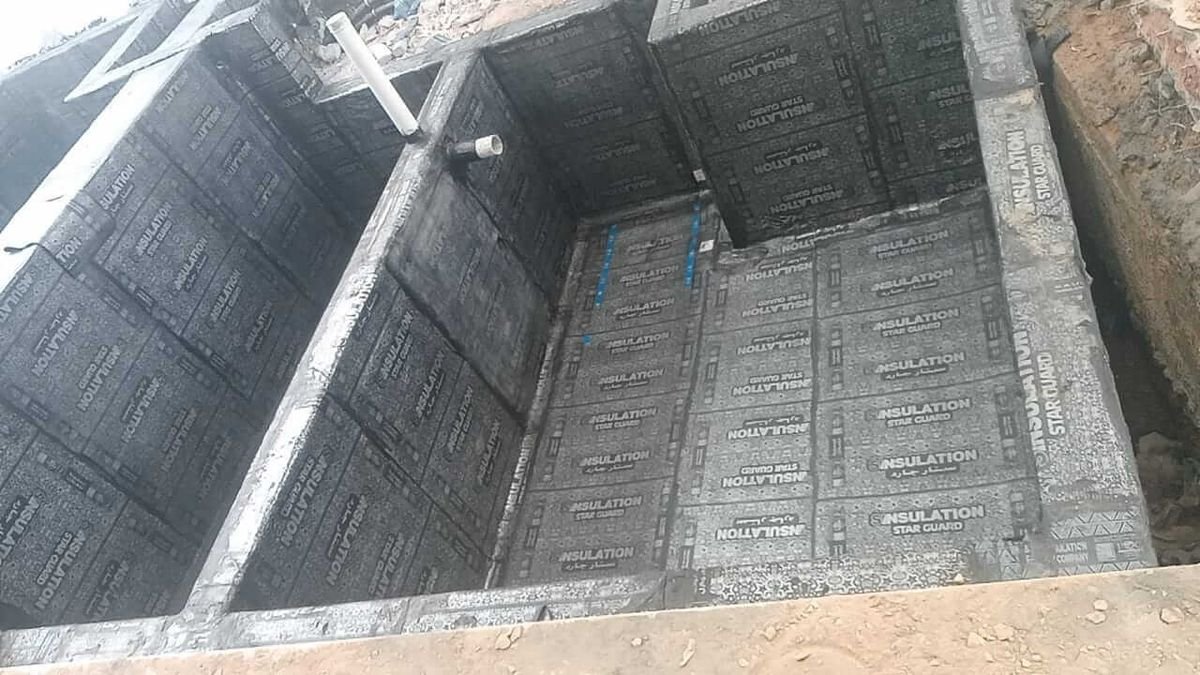
Rolls or sheets bonded to the surface, including systems applied to the outside of walls before backfilling. They offer uniform thickness, but laps and corners must be executed precisely.
Crystalline products
Added to concrete or applied to its surface, they react with moisture to form crystals that block pores. They are a useful extra layer of protection for the concrete but are usually combined with a surface system rather than replacing it.
Quick comparison
| Type | Flexibility | Tile compatibility | Typical use |
|---|---|---|---|
| Flexible cementitious | Good | Excellent | Inside concrete pools |
| Polyurethane | Very high | Depends on product | Moving areas and roofs |
| Epoxy | Low | Depends on system | Sensitive zones and finishes |
| Sheet membranes | Good | Depends on product | External walls before backfill |
| Crystalline | Does not bridge moving cracks | Excellent | Extra concrete protection |
How the Riyadh climate affects the choice
- Thermal movement: the upper walls near the waterline heat and cool daily, so the system must be flexible enough in that band.
- Applying in heat: cement-based products dry too fast in the sun and crack before curing. Work in the morning or with shade and moisture control as the product requires.
- Leaving the pool empty: a waterproofed pool left exposed to sun for a long time without tiles or protection can suffer, so stages should follow on promptly.
Correct application steps
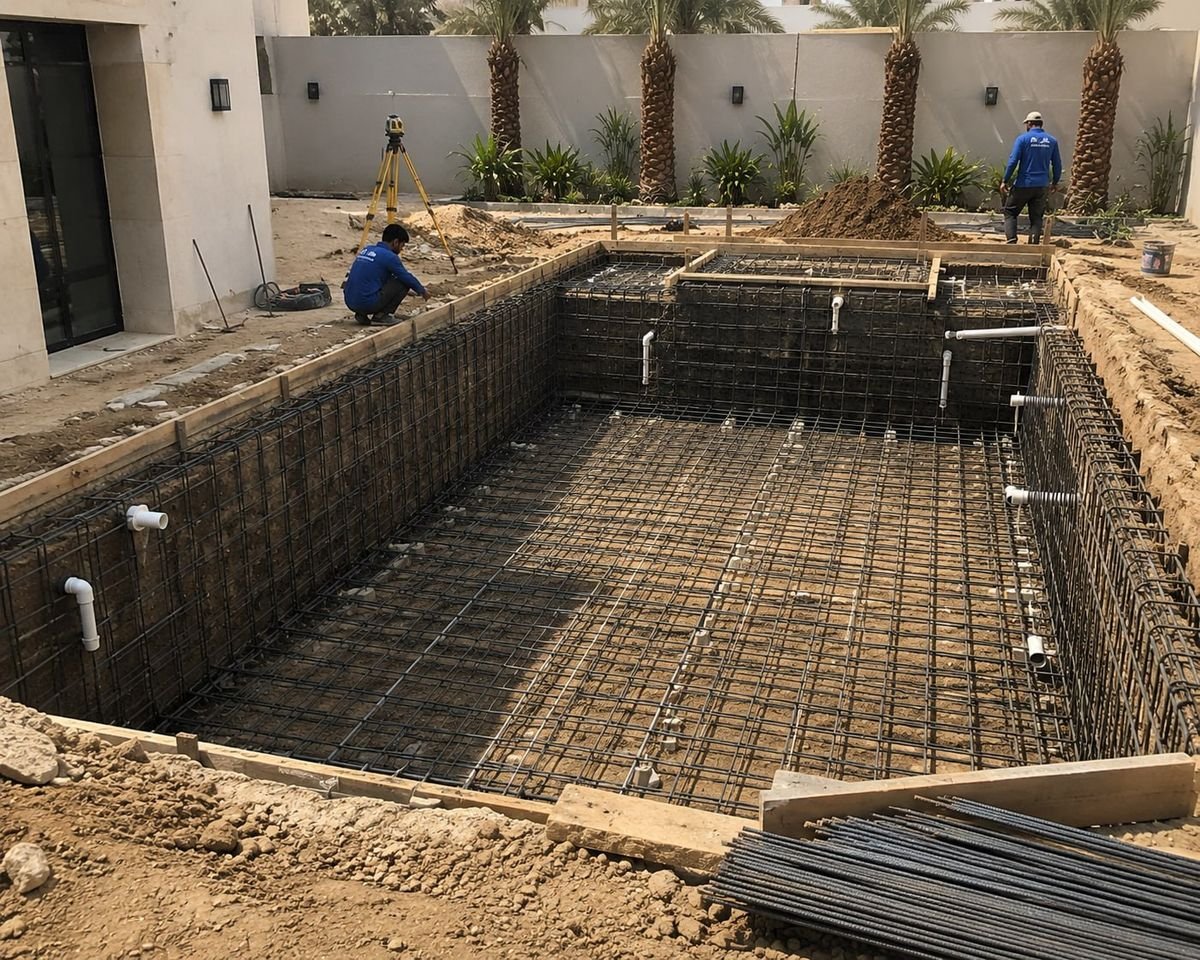
- Prepare the concrete: remove oils, formwork residue and dust, and repair honeycombing and voids.
- Corners: form coves where walls meet the floor, since sharp corners are weak points.
- Penetrations: reinforce around inlets, skimmers, lights and drains with collars or tapes. Most leaks start around these openings.
- Coats: apply the recommended number at even thickness, each in the opposite direction, with reinforcing mesh at corners if the system calls for it.
- Curing: let the system cure as specified, protected from direct sun and dust.
- Flood test: fill the pool before tiling and watch the level for long enough, checking outside walls where possible.
Where most leaks start
- Around light niches, inlets and skimmers.
- Construction joints if the pool was not poured in one go.
- Wall-to-floor corners and where steps meet walls.
- The top edge where waterproofing meets coping stone.
- Exposed steel or tie ends not treated before waterproofing.
If you are renovating an existing pool, read waterproofing or tiles first to get the order right.
Questions to ask before signing
- Which exact system, how many coats, and is it rated for permanent immersion?
- How will penetrations, corners and joints be treated?
- Is there a flood test before tiling, and for how long?
- Is the system compatible with the tile adhesive?
- Does the written warranty cover waterproofing and leaks, and on what terms?
- Is there engineering supervision during waterproofing?
Frequently asked questions
What is the best waterproofing for a pool in Riyadh?
There is no single best product. Flexible cementitious systems suit most buried concrete pools, while polyurethane suits areas with more movement. The decision depends on design and location.
Does waterproof concrete replace a waterproofing layer?
It helps by reducing porosity, but it does not bridge cracks that open with heat and movement, so a flexible surface system is still needed.
How long should the flood test last?
It depends on pool size and conditions. What matters is long enough to spot any abnormal level drop after allowing for evaporation, so it should not be rushed.
Can I waterproof a pool from inside without removing tiles?
Some products are applied over tiles for specific cases, but standard waterproofing goes on the concrete beneath the finish. The leak source should be identified first through an inspection.