In this article
Most pool system maintenance happens without touching the water: replacing a pump, cleaning a filter, fixing an electrical panel. But some parts sit inside the shell or are buried in its walls and floor, and you can reach them only by draining. The key question is when draining is truly required for system work, and when it is overkill. This article draws that line so you neither drain without reason nor postpone a drain you need.
A quick map of pool systems
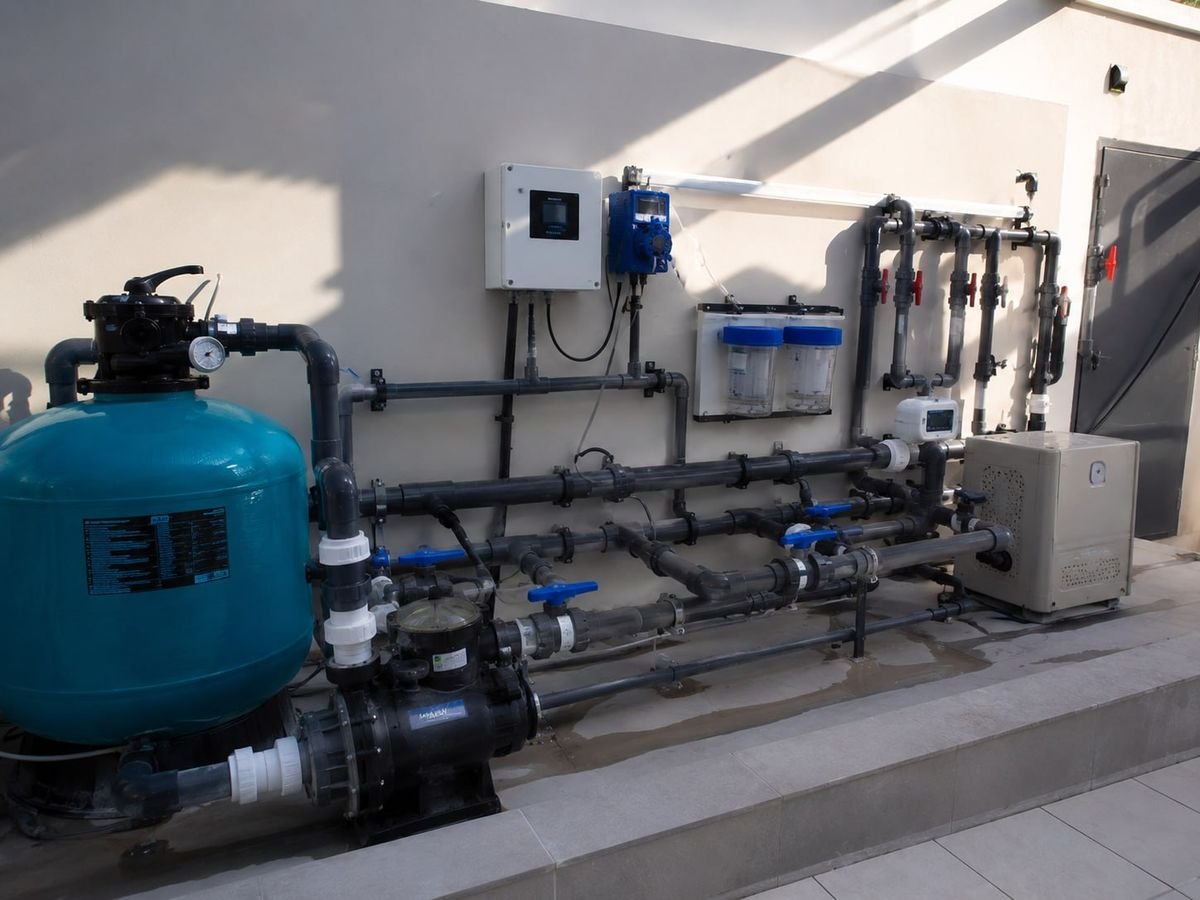
Water leaves the pool through main drains in the floor and skimmers in the wall, runs through buried lines to the pump room, passes the pump, filter and treatment equipment, then returns through wall inlets. Alongside this loop is the lighting system, with fixtures set in the walls and cables in dedicated conduits.
| Part | Location | Drain needed for service? |
|---|---|---|
| Pump and filter | Pump room | No |
| Electrical panel and transformers | Pump room or nearby | No |
| Skimmer | At the waterline | Usually just lower the level |
| Wall inlets | Just below the surface | Lower the level or partial drain |
| Main drains | Deepest point | Usually yes |
| Wall lights | Underwater | Depends on fixture type |
| Buried lines | Under the floor and around the shell | Depends on the fault location |
Deep plumbing: when draining is unavoidable
Buried lines are a common source of hidden leaks in older pools. When a pressure test shows a line losing water, the fault area is roughly known. If it is under the pool floor or where the line meets the main drain, draining is needed because you must break around the fitting or into the floor. A line broken outside the shell, under walkways or garden, usually needs external excavation instead. A full replacement of old plumbing normally coincides with a full renovation that includes draining. See pool pipe leaks and their repair.
Main drains and floor fittings
Main drains matter for circulation and for safety. A damaged or broken cover can be dangerous to swimmers, especially children, because suction is strong. Work that needs draining includes replacing a broken or outdated cover with a safe type, fixing leaks around the drain body caused by failed waterproofing, clearing a deep blockage that cannot be reached from the pump room, and adding a second drain or changing the layout for better safety and circulation.
Underwater lighting: when is draining needed?
Some fixtures are designed to be pulled out and lifted above the water on a long cable, so they can be replaced without draining. Others, especially in older pools, are fixed in a way that needs the level lowered below the light or a full drain. Swapping a lamp in a pull-out fixture usually needs no drain; water inside or around a fixture needs a lower level or a drain plus waterproofing repair; a new lighting system or added fixtures need draining to cut openings and run and seal conduits. Any electrical work needs a qualified technician, isolation and proper earth leakage protection.
Maintenance that needs no drain
- Pump replacement or repair in the pump room.
- Filter cleaning or media and cartridge changes.
- Replacing exposed valves and fittings in the pump room.
- Servicing the panel, timers and transformers.
- Installing treatment equipment such as a salt chlorinator or controllers.
- Fixing skimmers or shallow inlets by lowering the level.
Combine the work in a single drain
Draining costs time and money, and an empty pool needs precautions. If you drain for one reason, use the opportunity. Before draining, ask for a full inspection listing every job that needs an empty shell: main drains, lights, floor waterproofing, hollow tiles and nearby lines. That avoids another drain soon after. YAM Pools determines during the site visit whether the required work truly needs draining and plans to combine the required jobs in one go, with a detailed written quotation and technical supervision, in Riyadh and across Saudi Arabia.
Frequently asked questions
Does replacing the pool pump need draining?
No. The pump sits in the pump room and is replaced by closing the right valves without draining the shell.
When does plumbing require a full drain?
When the leak or blockage is in the section under the pool floor or at the main drains, because reaching it means breaking inside the shell.
Can I upgrade pool lights without draining?
With pull-out fixtures, usually yes. Adding new fixtures or treating leaks around them needs a lower level or a drain.
If I drain for one repair, what else should I do?
Check the main drains, lights, hollow tiles and floor waterproofing, and fix what is needed before refilling so you avoid another drain soon.