In this article
Draining a pool is a big decision. It means no swimming for a while, losing a large volume of water, exposing the shell to conditions it was not designed for, and extra cost for refilling and rebalancing. It should not be taken lightly, and many leaks are fixed without a full drain. But one type of leak makes draining a necessity rather than an option: a deep leak in the pool floor.
This article explains what a deep floor leak is, how to tell whether your pool has one, why underwater repair is not enough, how treatment is done properly after draining, and which precautions stop the draining itself from causing new damage.
What is a deep floor leak?
It is a leak that goes beyond tiles or grout on the floor surface and reaches the waterproofing layer or the concrete itself. Water has found a path through every layer of the pool to the soil. Common forms include:
- A crack in the concrete from soil settlement or movement, often visible as a continuous line on the floor.
- Waterproofing failure over a wide area, with no single point to seal but a whole zone seeping slowly.
- A leak around the main drain reaching below the floor where pipe, concrete and membrane meet.
A surface leak can usually be treated from above. A deep leak needs access to the layers under the tiles, which cannot be done with water on top.
Signs of a deep leak
- Continuous loss that never stops at a level and is unaffected by the pump.
- A clean pipe pressure test, confining the problem to the pool shell.
- A visible floor crack, often long or branching.
- Raised or loose tiles in one floor zone, or a wide hollow-sounding area.
- Dye drawn towards several floor points rather than one.
- Sinking or damp paving around the pool, or a change in coping level.
- The leak returning after earlier underwater repairs.
Why this kind of leak requires a full drain
- Access: treating a structural crack means opening, cleaning and injecting or filling it, which needs a dry surface.
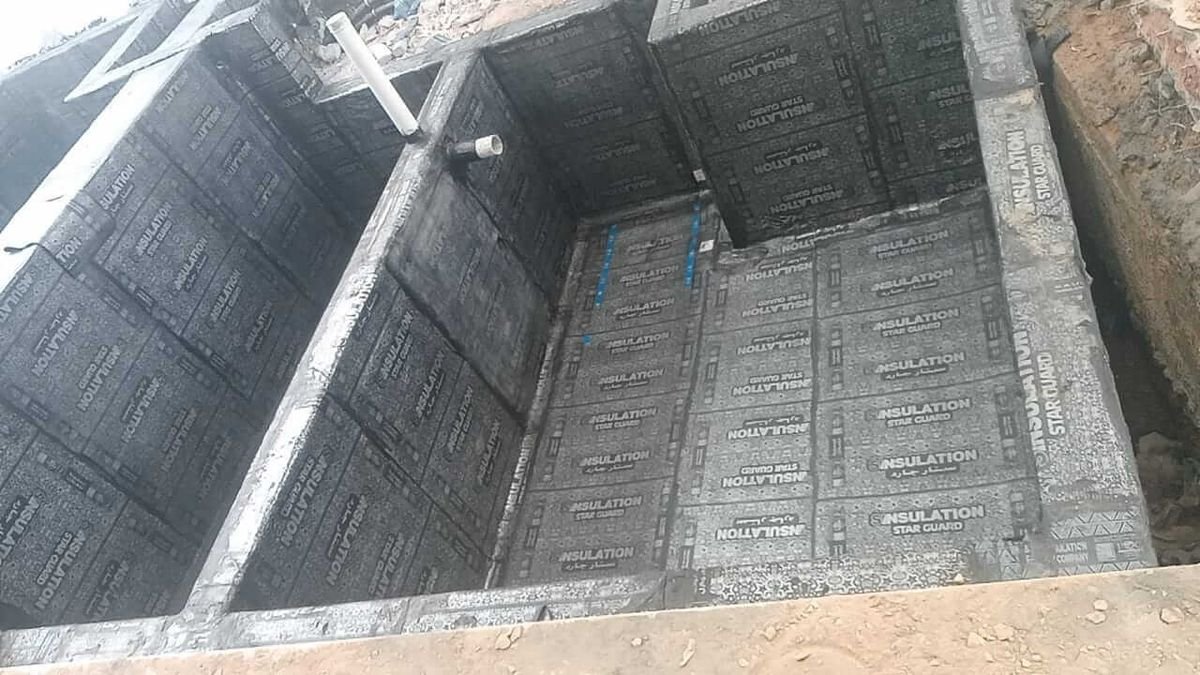
- Waterproofing application: membranes need a clean, dry surface to bond and cure. Applied to a damp surface they fail.
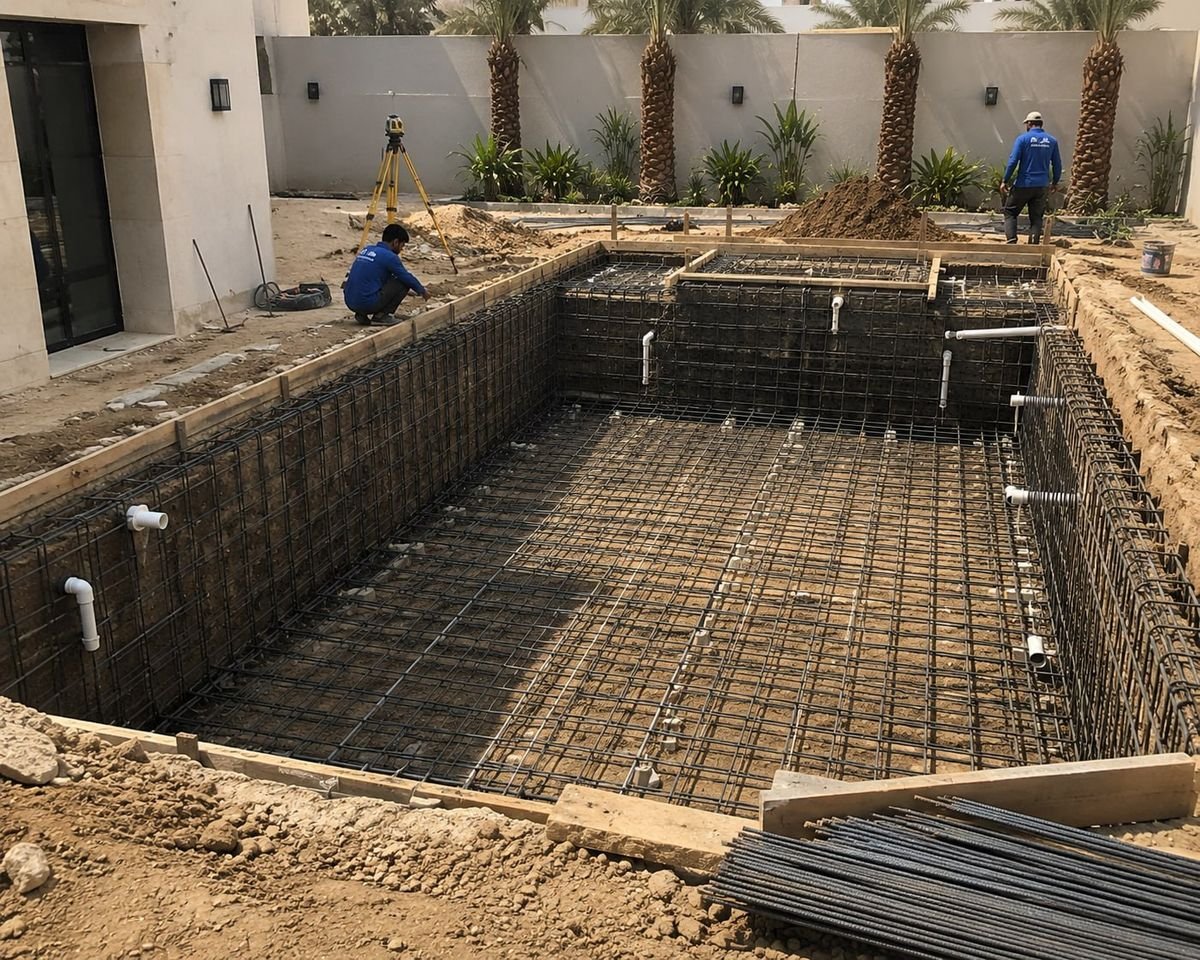
- True extent of damage: once drained and tiles are lifted, the real length of the crack or failed area becomes clear, often larger than it looked under water.
- Soil and drain checks: sometimes the drain surround or soil must be assessed, which is impossible with the pool full.
- Testing: the repaired waterproofing must be fill-tested before tiling.
Precautions for safe draining
- Assess groundwater and soil: on low-lying or damp sites, pressure under an empty pool can lift the floor or cause extra cracking.
- Timing: avoid leaving the floor exposed to midday sun for long, which stresses the remaining tiles and grout.
- Water discharge: discharge to a suitable place that will not wet the building foundations or affect neighbours.
- Protect equipment: stop the pump and isolate the lighting before draining.
- Have the plan ready: do not drain first and look for a repair team later. Work should start right after draining.
For more, read safe pool draining steps before renovation.
Treatment steps after draining
- Clean and inspect the floor visually and by tapping to locate weak areas.
- Remove tiles in the damaged zone with a margin around the crack or drain.
- Treat the crack by opening, cleaning and repairing or injecting it according to type and depth.
- Treat the drain if it is a source, resealing the pipe-concrete junction or replacing the drain body.
- Re-waterproof with a suitable flexible product in several coats, reinforcing corners and overlapping sound membrane.
- Fill test and monitor the level before finishing.
- Finish with tiles and grout, refill and balance the water gradually.
When a full drain is not needed
If dye shows a single point, such as a small surface crack or an open grout joint, a local underwater repair may be enough. If the leak is at fittings or near the waterline, lowering the level may suffice. A full drain is for damage that is deep, widespread or recurring.
Floor leak repair with YAM Pools
YAM Pools only recommends draining after confirming the source is in the shell and an underwater fix will not work. We plan draining and work so the pool is empty no longer than necessary, and carry out the repair under engineering supervision with a fill test and a written warranty on workmanship and waterproofing. We serve Riyadh and all Saudi cities.
Frequently asked questions
Can a floor crack be sealed with an underwater product?
Small surface cracks at a single point, yes. Structural, long or recurring cracks need draining, repair and re-waterproofing of the area.
How long does the pool stay empty during repair?
It depends on the extent of damage, material curing and the fill test. Planning ahead keeps this to a minimum.
Can draining harm the pool?
Yes, if done without assessment, especially with groundwater or long sun exposure. It should follow an assessment and a ready work plan.
Why fill-test before tiling?
Any waterproofing fault found before tiling is easy to fix. After tiling it means removing finishes again.