In this article
The waterproofing layer is the part of the pool you never see, yet it carries the pool's core job: keeping water inside and away from the concrete and soil. Tiles, lights and equipment all come after that. When waterproofing fails at one point it can be repaired locally, but when failure is widespread, the only real fix is full re-waterproofing, and that always starts with draining the pool.
This article focuses on full re-waterproofing: why waterproofing fails over time, how to tell general failure from a local one, why it cannot be done with water in the pool, which materials are used, and the stages from draining to final refill.
Why waterproofing fails over time
- Unsuitable material from the start: some older pools used rigid products that cannot follow concrete movement and crack with soil shifts or repeated heat cycles.
- Poor application: applied to a damp or dirty surface, in one thin coat, or without reinforcing corners and fittings.
- Structural movement: slight settlement or shrinkage cracks stretch the membrane until it tears if it is not flexible enough.
- Water chemistry: long periods of unbalanced water erode grout, so water sits constantly against the membrane, weakening some products.
- Accumulated patches: each local repair breaks membrane continuity, and poorly lapped edges become new weak points.
- Repeated unprotected draining: long exposure to strong sun ages membrane and tiles faster.
Signs of widespread waterproofing failure
| Sign | Suggests local failure | Suggests general failure |
|---|---|---|
| Dye test | One or two specific points | Draw at many points on different walls |
| Hollow tiles | One small area | Spread across floor and walls |
| Repair history | First leak | Repeated repairs, leak returns |
| Damp outside the pool | One side | Several sides |
| Age and materials | Relatively new pool | Old pool with rigid traditional waterproofing |
Other signs include hairline grout cracks on several walls, vertical streaks of white deposits, and damp on outer walls or in an adjoining plant room.
Why full waterproofing requires draining
Underwater products are designed to seal limited points, not to create a continuous membrane over the whole pool. Full waterproofing needs:
- Removal of old finishes so the membrane bonds to a sound substrate.
- Surface preparation: cleaning, crack treatment and opening any weak concrete.
- A dry surface with suitable moisture for bonding and curing.
- Curing time between coats that cannot be skipped.
- A fill test before tiling.
Waterproofing materials used
Flexible cementitious coatings
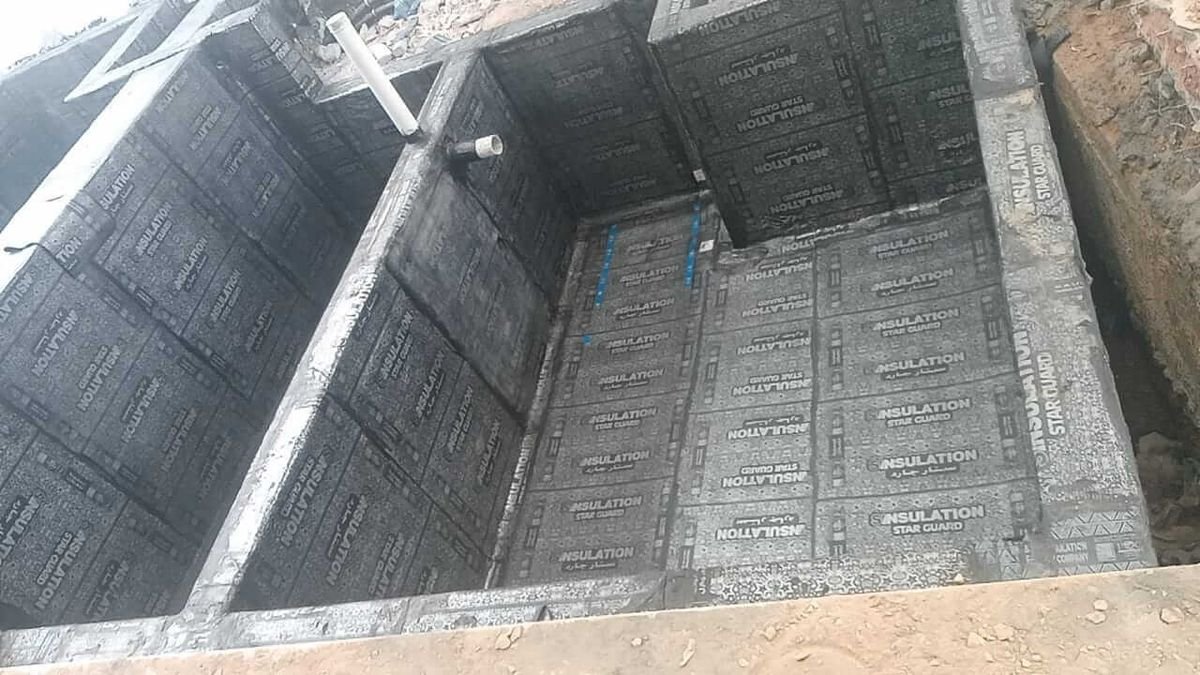
Polymer-modified cement applied by brush or trowel in several coats. They bond well to concrete and work with tile adhesive, making them a common choice for tiled pools.
Polymer or polyurethane systems
Higher flexibility and better crack tolerance, but they need precise surface preparation and sometimes an intermediate layer before tiling.
Epoxy in specific areas
Often used for crack repair, around fittings or as a special layer, valued for hardness and strong adhesion.
Tapes and accessories
Reinforcing tapes for corners and joints, and special collars around fittings and pipes. These details decide success at the weakest points.
The right product depends on concrete condition, finish and site. See our comparison of waterproofing materials for pools.
Stages of full re-waterproofing
- Assess the pool and confirm the pipes are sound before draining.
- Drain safely, considering groundwater and discharge.
- Remove tiles, grout and weak old layers.
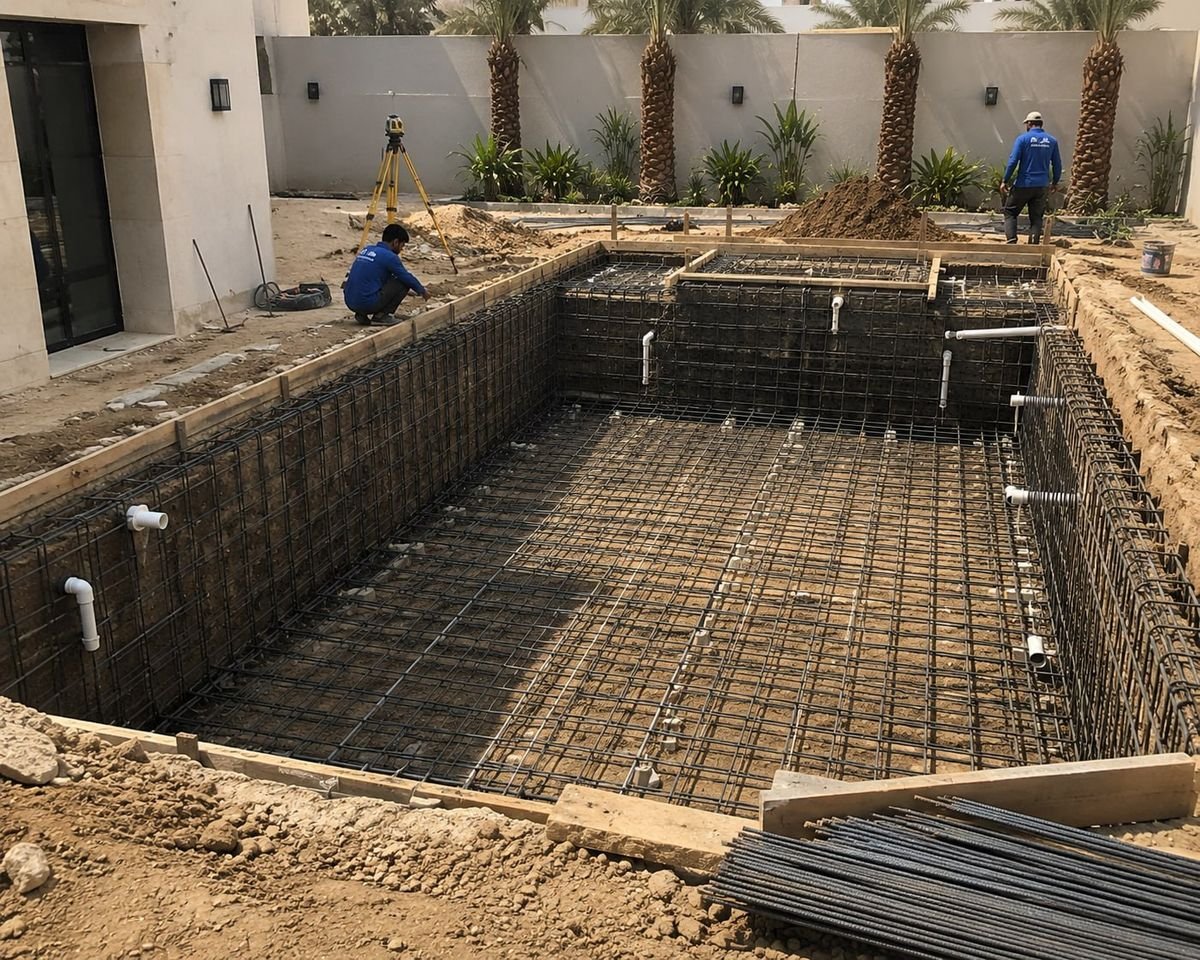
- Repair concrete defects and treat exposed rebar.
- Seal fittings and pipes with dedicated collars.
- Apply the membrane in coats, reinforcing corners and joints.
- Fill test and monitor the level.
- Drain the test water, then tile and grout.
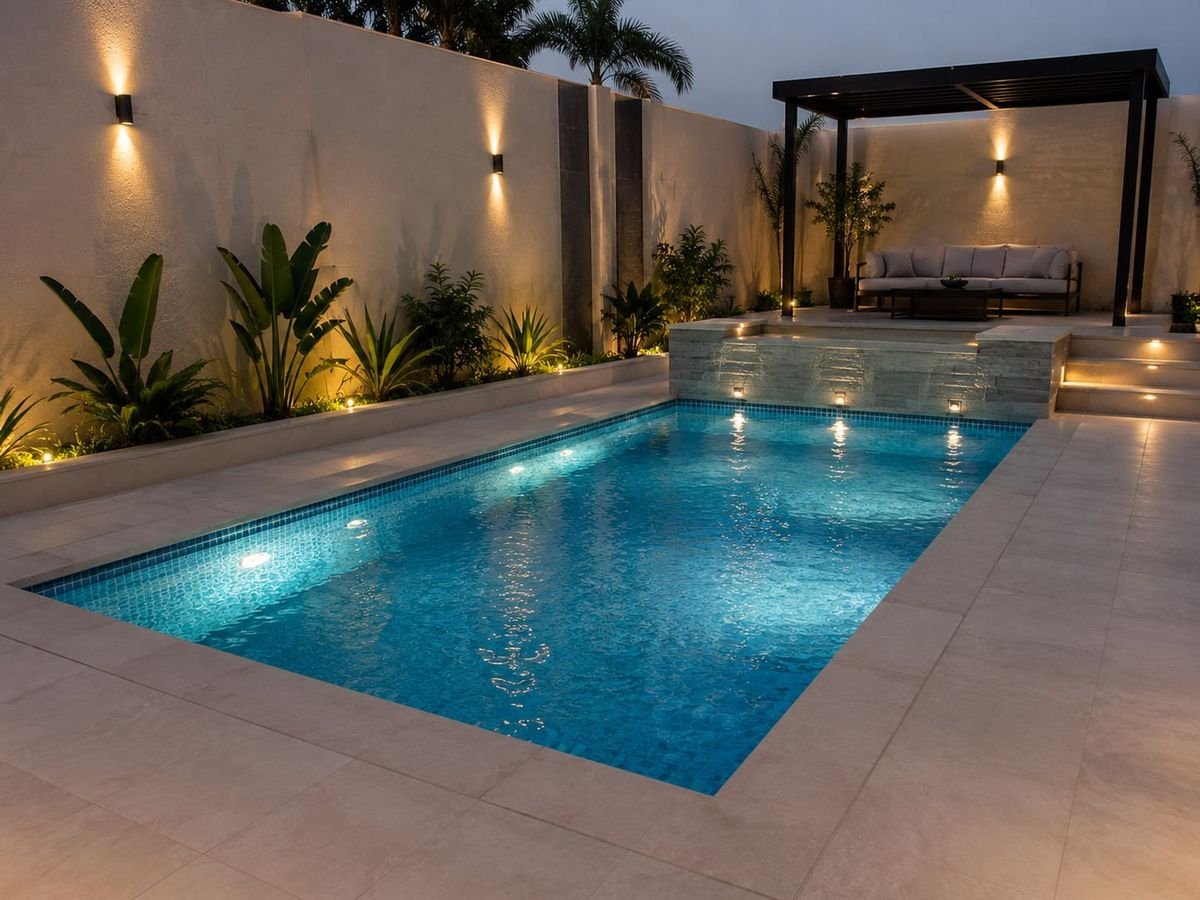
- Final refill, gradual water balancing and system start-up.
Full waterproofing or a local repair?
Many owners hesitate between fixing only the spot where the leak appeared and going straight to full waterproofing. A local repair makes sense when the pool is relatively new, the leak is at one clear point and has not been repaired before. If the pool is old with traditional waterproofing, repairs keep recurring and hollow tiles appear on several walls, local repairs usually become a recurring expense that never ends the problem.
A practical way to decide: add up recent repair costs, the extra water and chemicals, and the repairs you can expect next. If the path clearly leads to more repairs, full waterproofing stops it and gives you a pool you can rely on.
Care after re-waterproofing
Keep water balanced with pH near 7.2 to 7.6, check grout periodically, avoid unnecessary draining and watch the level to catch changes early.
YAM Pools carries out full re-waterproofing under engineering supervision, with a fill test before finishing, a written quotation stating materials and coats, and a written warranty on workmanship and waterproofing. We serve Riyadh and all Saudi cities.
Frequently asked questions
Can waterproofing be applied over old tiles?
In limited cases with special products, but damaged old tiles rarely give reliable adhesion. Removing them also reveals hidden defects.
How do I know I need full waterproofing, not a repair?
When leaks appear in several places, return after repeated repairs, or hollow tiles are widespread. Dye and pipe tests settle the decision.
Does full waterproofing solve every pool problem?
It stops water escaping through the shell. Pipe or equipment problems are handled separately, which is why we check them before draining.
Do I need new tiles with full waterproofing?
Usually yes, because tiles are removed to reach the surface. It is a chance to choose tiles suited to heat and chlorine.