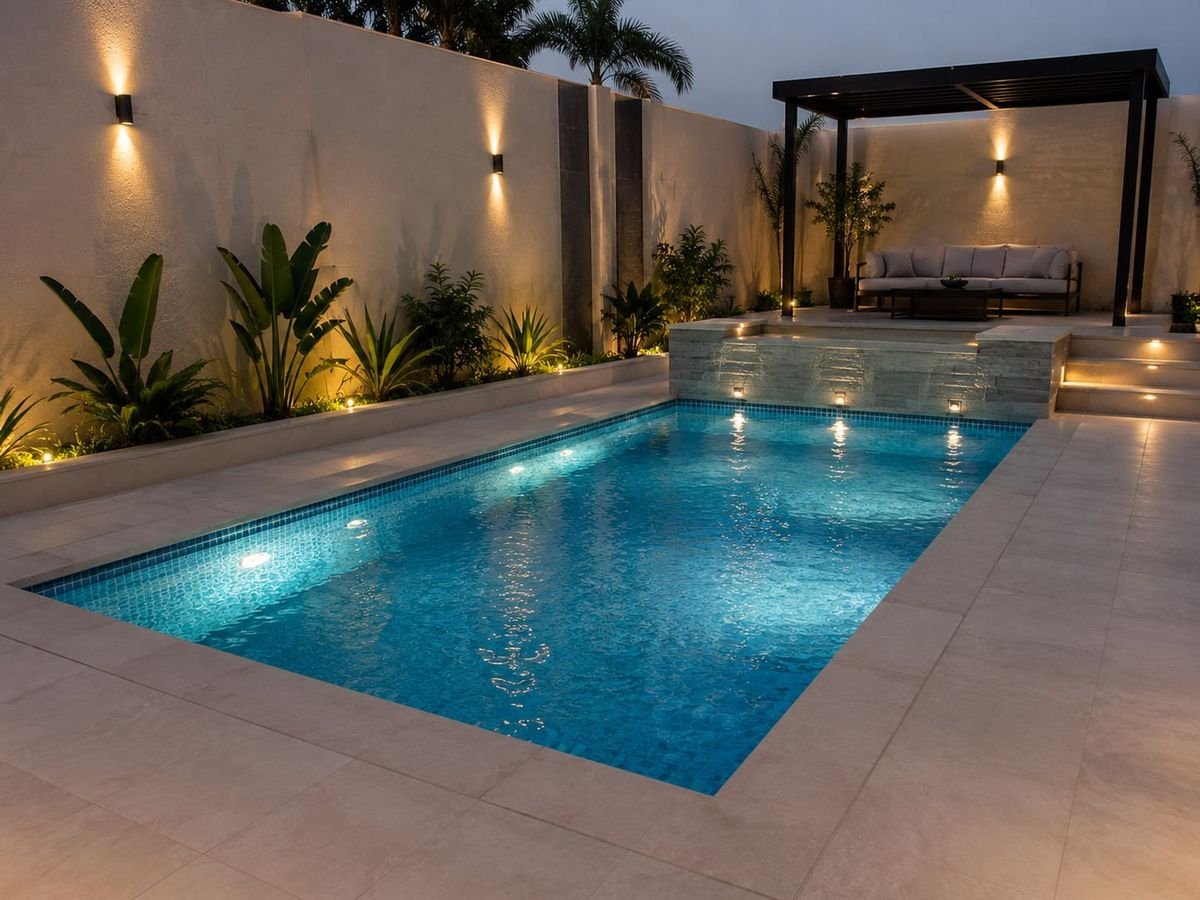
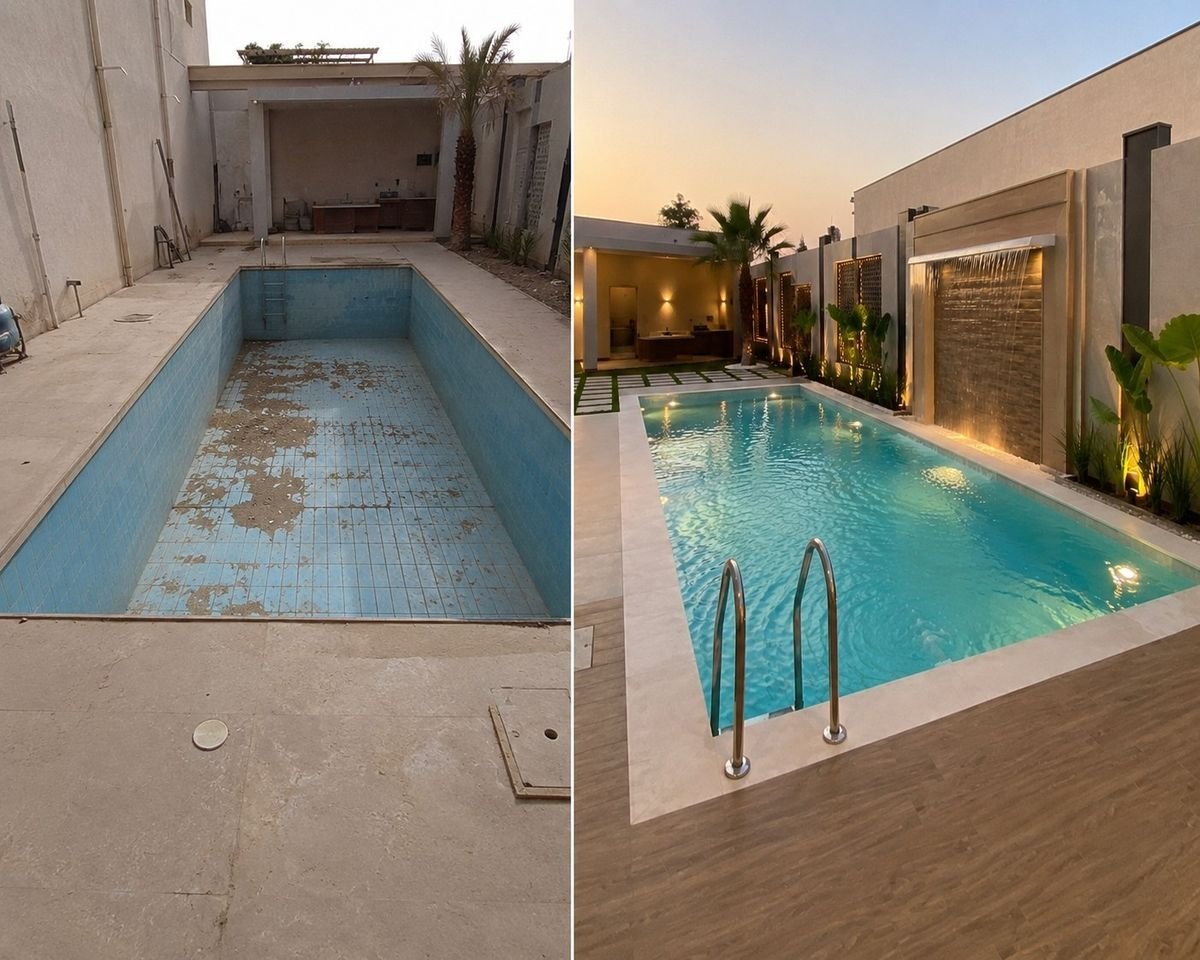
In this article
Most owners of older villas reach the same question once they notice a problem in the pool. Should I fix what I can see and move on, or open the whole file and renovate the pool from end to end? A quick answer is often wrong in both directions. Some owners pay for a full renovation they did not need, while others keep fixing the same spot again and again and end up paying for a full renovation in instalments without ever getting its result.
This article goes beyond defining the two options. It gives you a practical way to assess your pool part by part, so the decision is based on the real condition of the pool rather than a first impression.
Why the decision is harder with older pools
A new pool usually has clear, limited issues. An older villa pool is a set of components that aged together, each with its own condition. The tiles may look fine while the waterproofing beneath them is failing, or the shell may be sound while the pipes are corroded. What you see is only the top layer, and it rarely tells the full story.
The climate in most Saudi cities adds steady pressure. Strong daytime heat followed by cooler nights in some seasons causes repeated expansion and contraction in concrete, tiles and joints. Over time this stress shows up as fine cracks or tiles that lose their bond, sometimes in places you would not expect.
Assess your pool as five separate parts
Instead of asking whether the pool is good or bad overall, split it into five parts and try to understand each one on its own.
- Concrete shell. Are there visible cracks in the floor or walls? Are they in the finish only or in the concrete itself? Is there exposed steel or rust staining?
- Waterproofing. Does the water level drop faster than normal evaporation? Is there dampness around the pool, in the plant room or on a nearby wall?
- Tiles and finish. Is the damage limited to the waterline or steps, or spread across large areas? Do tiles sound hollow when tapped lightly?
- Pipes and plumbing. Is suction or return flow weak? Have leaks repeated in the pump room or under the deck?
- Equipment. Pump, filter, lighting and electrics. Do they work efficiently, or are breakdowns frequent and spare parts hard to find?
Turning the assessment into a decision
- One part affected, the rest sound. Partial renovation is usually right, for example a leak at a known light fitting or damaged waterline tiles over sound waterproofing.
- Two linked parts affected, such as waterproofing and tiles. You usually need a wider job that treats both together, because fixing one without the other brings you back to the start.
- Three or more parts, or the shell itself. A full renovation is usually more economical and more reliable in the long run than a chain of scattered repairs.
One signal many owners miss is repeat repairs. If the same problem has come back after being fixed, the real cause sits deeper than the repair point, and more local fixes mean more spending without a solution.
The real cost of each path
Partial work costs less at the time. But the fair comparison is between two paths, not two invoices. Ask yourself how many times you will need to drain the pool if you go with scattered repairs, whether new tiles will match the old ones in colour and size, and whether a small repair comes with a clear written warranty or leaves the rest of the pool on you.
A full renovation needs a bigger budget and longer downtime, but it brings the pool back to a consistent condition and makes maintenance planning easier afterwards. For a closer look at the money side, see our article on partial versus full renovation cost.
Is there a middle path?
Yes, and many villa owners choose it. The middle path is renovation in planned phases. You start with the most urgent part, such as leaks or waterproofing, and postpone what can wait, such as a lighting upgrade or a new tile design. It only works if the order is planned from day one. Installing new tiles today when you know the waterproofing must be redone soon means breaking those new tiles later.
When to get a specialist inspection first
- Cracks that widen over time or appear on more than one wall.
- A drop in water level with no known source.
- Settlement or cracking in the deck around the pool.
- Damp or visible leaks in the plant room or a wall next to the villa.
- A pool with no known maintenance history.
At YAM Pools we start with a site visit, then provide a written quotation describing each part and the available options. Larger jobs include engineering supervision and a written warranty on workmanship and waterproofing. Learn more about our pool inspection service.
Quick checklist before you decide
- Shell, waterproofing, tiles, pipes and equipment assessed separately.
- You know whether the issue sits in one part or several.
- You checked how often the same repair has been repeated.
- You compared two paths, not two invoices.
- You have a written phase plan if you chose to work in stages.
- The written warranty covers the work actually being done.
The right decision treats the cause, not just the symptom. Once you know the condition of each part, choosing between partial and full renovation becomes far simpler than it first seemed.
Frequently asked questions
Is partial renovation only a temporary fix?
No. If the problem is truly limited to one part and the rest of the pool is sound, a partial repair is a lasting solution. It only becomes temporary when the real cause lies deeper than the repair point.
Can I start with partial work and finish later?
Yes, as long as the phases are ordered from the start. Begin with the foundation work such as waterproofing and leaks, and postpone parts that are not affected by waiting, such as lighting.
Who decides the renovation type, me or the technical team?
The final decision is yours, but it is sound only when based on an inspection report showing the condition of each part. The team explains the options and what each one leads to.
Does pool age alone mean a full renovation is needed?
Age is an important signal but not enough on its own. Some older pools are in good shape thanks to regular care, and only an inspection shows the real need.