In this article
Every pool reaches a point where small repairs stop working. You fix one tile and the next one falls. You treat a leak and water loss appears elsewhere. You replace the pump and the lights fail. That is when the question arises: has the pool reached the stage of full renovation? This article focuses on the signs that say yes, how to read them correctly and what happens if you wait.
What we mean by full renovation
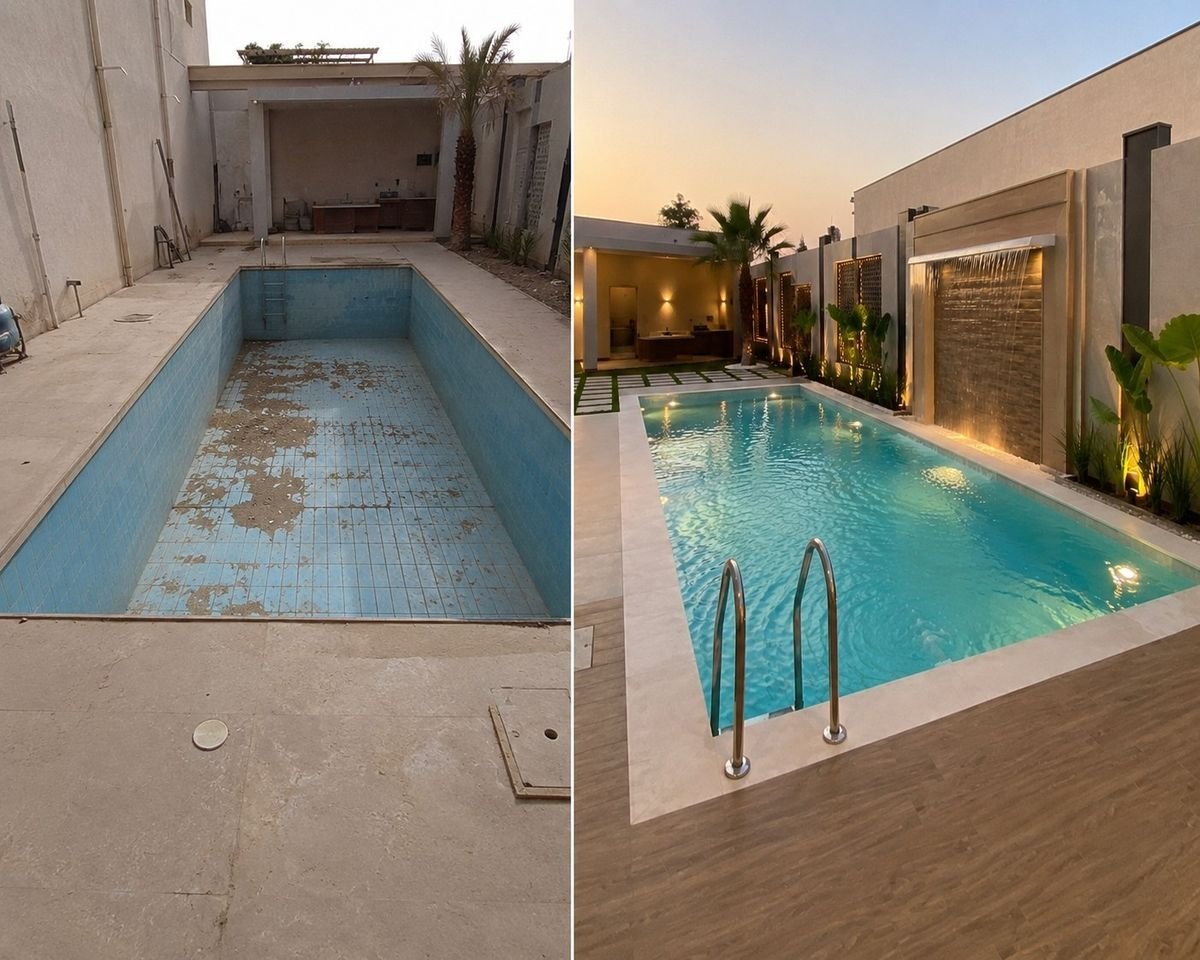
A full renovation rehabilitates the pool from its core layers to the finish: complete draining, tile removal, concrete treatment, re-waterproofing the whole shell, new tiling, and a check and upgrade of technical systems where needed. The idea is to restore the pool as one integrated whole instead of treating each problem alone. It is not the same as demolishing and rebuilding, because the concrete shell stays if it is sound or repairable.
Signs that partial work is no longer enough
One sign may not settle it, but several together paint a clear picture:
- Ongoing water loss despite earlier leak repairs, or with no single source after testing.
- Hollow or falling tiles on several walls, not one corner.
- Multiple cracks or cracks reaching the concrete, especially with rust stains.
- Worn grout across most of the pool, crumbling or growing algae repeatedly.
- Damp in adjacent decks, walls or a nearby room.
- Tired systems: old pump, filter and plumbing with frequent faults and weak circulation.
- A history of repeated repairs without a lasting fix.
Reading the signs without overreacting
Not every sign means full renovation. Summer water loss may be normal evaporation, especially with wind and heat. Faded tiles may be purely cosmetic. Algae may reflect weak chemical treatment rather than failed grout. Before judging, run a bucket test, tap tiles on several walls and record hollow spots, photograph and mark cracks, check any repair history and ask for a professional inspection that brings it all together. For the opposite case, see when partial renovation is enough.
Risks of delaying a needed full renovation
- Leaking water soaks the soil under and around the pool and can cause settlement.
- Water reaches the reinforcement, which rusts, expands and cracks the concrete.
- Damp can spread to adjacent decks, walls and the pump room.
- Repeated partial repairs consume budget without a final result.
- Falling tiles and broken edges become a safety hazard for swimmers.
Delay rarely saves money. It usually turns an ordinary full renovation into one with larger structural repairs.
What a full renovation usually includes
| Stage | Purpose |
|---|---|
| Inspection and planning | Identify causes, scope and materials |
| Safe draining | Access the layers while protecting the shell |
| Tile and finish removal | Reveal waterproofing and concrete condition |
| Structural treatment | Repair cracks, steel and weak areas |
| Plumbing and electrical | Repair or upgrade lines, fittings and lights |
| Waterproofing and fill test | Confirm the shell holds water before tiling |
| Tiling and grout | New pool-rated finish |
| Systems and start-up | Upgrade pump and filter, balance the water |
How long does it take?
There is no fixed figure. Duration depends on pool size, the concrete's condition after removal, the waterproofing type and its curing time, material availability and weather in your city. Respecting curing times and the fill test matters more than speed. A good contractor gives an approximate stage schedule after inspection and updates it once the layers are exposed.
Your next step
If you notice several of these signs, do not start another repair before seeing the full picture. Ask for an inspection and decide based on its results. YAM Pools determines after the site visit whether your pool needs full renovation or partial work is enough, and provides a written quotation with stages and materials, engineering supervision and a written warranty on workmanship and waterproofing, in Riyadh and all Saudi cities.
Frequently asked questions
Does a full renovation always require draining?
Almost always, because it involves removing tiles and treating waterproofing and concrete, which can only be done on a dry, exposed surface.
Can I use the pool during a full renovation?
No. The pool is drained and becomes a work area for the whole period, returning to use after refilling and water balancing.
How do I know my pool needs full rather than partial work?
If problems are spread across several areas, the leak has no single source, or repairs keep repeating, full renovation is likely. Inspection confirms it.
Does full renovation mean demolishing the pool?
No. The concrete shell stays if it is sound or repairable. Full renovation rehabilitates the layers and systems.