In this article
The floor and walls are the real body of the pool. Tiles, lights and filters all sit on this body, and if it is faulty any upgrade on top is temporary. In older villa pools in Riyadh, the shell has been through years of strong summer heat, expansion and contraction, and changing water levels, so it needs special attention during renovation.
This article is more technical than most. It explains what actually happens when a pool shell is renovated, from diagnosis to finish, so you can understand a quotation and ask the right questions. The same principles apply in other Saudi cities.
Why floors and walls wear in older pools
- Heat cycles cause fine cracks over years, especially at corners and changes in thickness.
- Waterproofing at the end of its life loses flexibility and cracks with small concrete movement.
- Long periods of unbalanced water attack grout and exposed concrete and let water go deeper.
- Old leaks change the soil around and under the pool and can cause slight movement.
- Weak original construction in thickness, steel layout or pouring shows up years later.
Diagnosis before any demolition
- With the pool full. Leak tests, level monitoring and plumbing checks to see whether the problem is in the shell or the pipes.
- After draining. Tapping tiles to map hollow areas, photographing and measuring cracks, noting rust or damp.
- After removing tiles. The true concrete condition appears. Are cracks only in the render or in the concrete? Is steel exposed? Is concrete weak or crumbling?
Each stage can adjust the plan, so a good quotation states what is expected and how surprises are handled.
Crack types and how each is treated
| Crack type | Description | Usual treatment |
|---|---|---|
| Hairline surface cracks | In render or finish only, not moving | Clean, fill with suitable repair material, then waterproof |
| Stable concrete cracks | Into the concrete, not widening | Open as a channel, clean and fill with repair mortar or injection |
| Active cracks | Widening or moving | Find the cause first, then flexible materials, sometimes a structural assessment |
| Cracks with rust | Brown staining or visible steel | Break out around the steel, clean and protect it, rebuild with repair mortar |
An active crack is never just filled. Without treating its cause, it opens again and takes the waterproofing and tiles with it.
Treating and waterproofing the floor
- Remove old tiles and adhesive from damaged areas or the whole floor.
- Clean off salts, deposits and weak material.
- Treat cracks and steel according to type.
- Correct falls towards the main drain where needed.
- Detail around the main drain and fittings, common leak points.
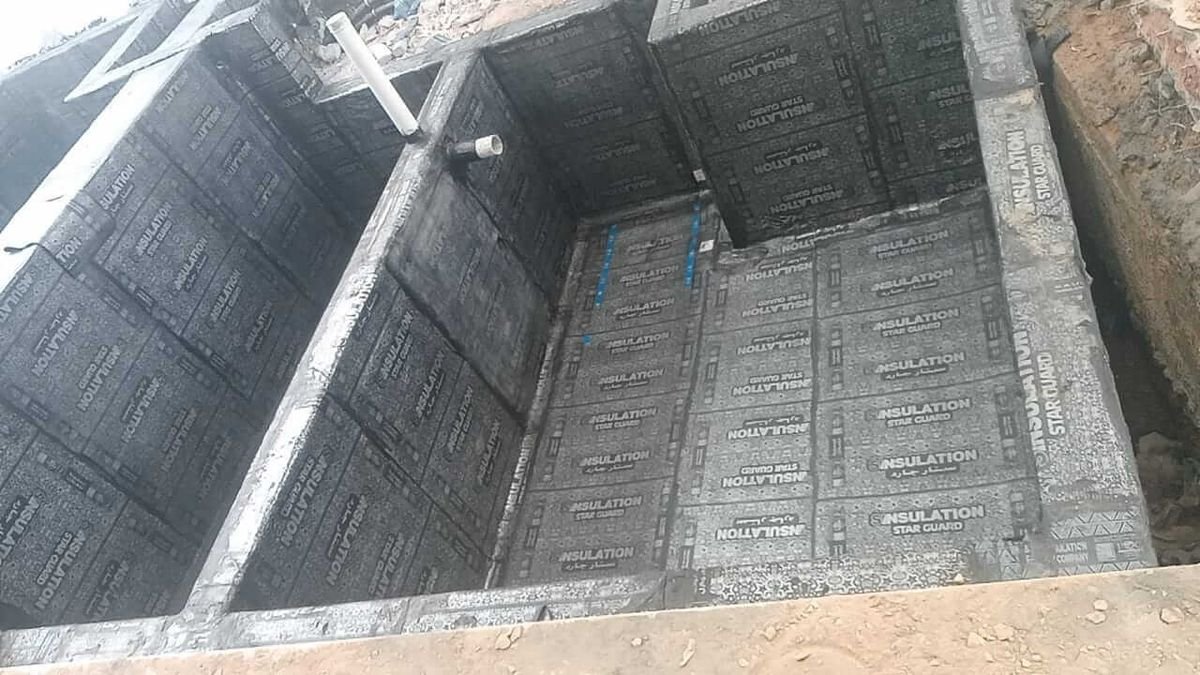
- Apply the waterproofing system in layers with proper drying times.
- Run a fill test before any tiling.
Walls, corners and junctions
- The floor-to-wall corner is a known weak point and is usually coved with special mortar and reinforced with tape or an extra layer.
- Around lights, returns and suction fittings the waterproofing must be continuous and tight.
- Steps and benches have many corners and thickness changes and need careful work.
- The waterline and coping face sun and constant wetting and drying.
- The coping-to-deck joint must be sealed with a flexible material so water cannot enter behind the wall.
For why this order matters, read waterproofing or tiles first.
Finish and materials for Riyadh heat
- Pool-rated tile adhesive that tolerates permanent immersion and chemicals.
- Water and chlorine resistant grout, with epoxy grout often a strong choice.
- Low-absorption tiles such as porcelain or pool-grade glass mosaic.
- Lighter colours at the waterline and coping, which absorb less heat.
- Movement joints where needed so thermal movement does not crack tiles.
Questions for the quotation
- Does diagnosis include an inspection after tile removal, and how are surprises handled?
- How will each expected crack type be treated, including exposed steel?
- Which waterproofing system is used, with reinforcement at corners and fittings?
- Is there a fill test before tiling, and what adhesive, grout and tiles are used?
- What does the written warranty cover?
YAM Pools diagnoses the floor and walls before any demolition, provides engineering supervision for concrete and waterproofing work, and gives a written warranty on waterproofing and workmanship in Riyadh and across the Kingdom.
Frequently asked questions
Is every crack in a pool floor serious?
No. Hairline surface cracks are usually simple to treat. A crack that widens or shows rust is serious and needs its cause diagnosed before treatment.
Can I waterproof the floor without removing tiles?
Proper shell waterproofing needs a clean, prepared concrete surface, so tiles must come off in treated areas. Local solutions exist for some points but do not replace full waterproofing.
Why do corners need special attention?
They join two surfaces that move differently, so they crack and leak more easily. They are reinforced with extra layers or materials.
What happens if rusted steel is exposed?
Damaged concrete around the steel is broken out, the steel is cleaned and protected, and the area is rebuilt with repair mortar before waterproofing.