In this article
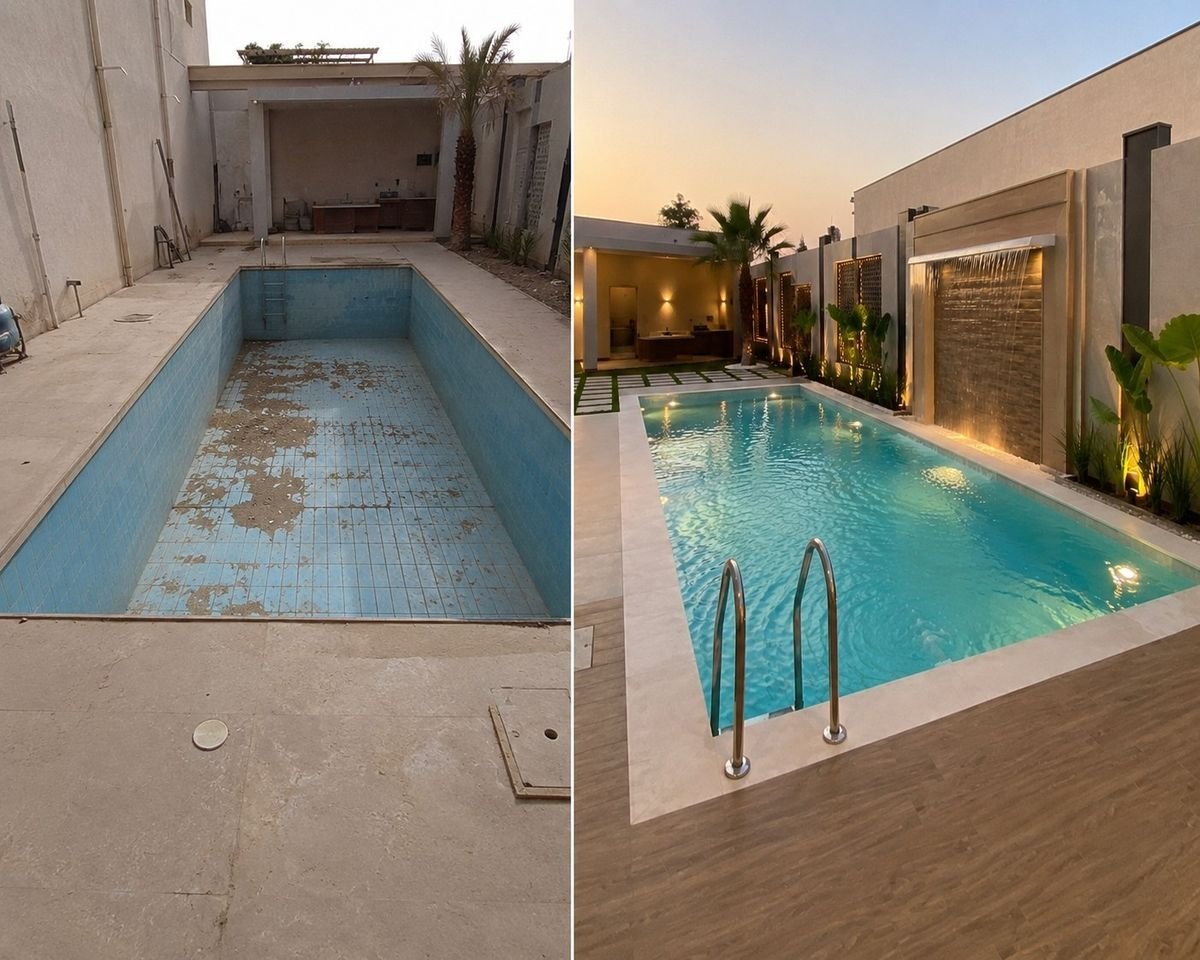
An old villa pool does not fail suddenly. It sends small signals over a long time, and many become so familiar that we stop noticing them. A cracked tile becomes part of the view, topping up becomes a weekly habit, and the filter is louder but still running. Then the signals add up and the pool needs a bigger renovation than it would have if they had been caught early.
This article is a walk-around check you can do yourself in under an hour, moving from the water to the tiles, the deck and the plant room, then ranking what you find by priority.
Start with the water
- Is the level dropping faster than before? If you top up more than in past seasons under similar conditions, a leak is possible. A bucket test gives a first answer.
- Is the water hard to balance? pH that keeps shifting despite treatment can mean fresh water entering constantly, or an old finish reacting with the water.
- Does algae return quickly in the same corners and cracks? That points to rough or porous surfaces or weak circulation.
- Does the water cloud soon after cleaning? Usually a tired filter or poor circulation.
Look at tiles and walls
- Cracked or broken tiles in several places, not just one.
- Worn or dark grout that will not clean, meaning it has lost its bond.
- Tiles that sound hollow when tapped at the waterline.
- White or brown deposits on tiles or seeping from joints.
- Cracks in the walls, and whether they grow.
- Rust stains from cracks or around metal parts, which may mean water has reached the steel and needs prompt inspection.
Check the deck and edges
- Sinking or tilting deck tiles near the pool, possibly from water reaching the soil.
- An open joint between coping and deck that lets splash and rain behind the pool wall.
- Loose or broken coping stones, a safety issue before a cosmetic one.
- A patch of ground that stays damp without irrigation.
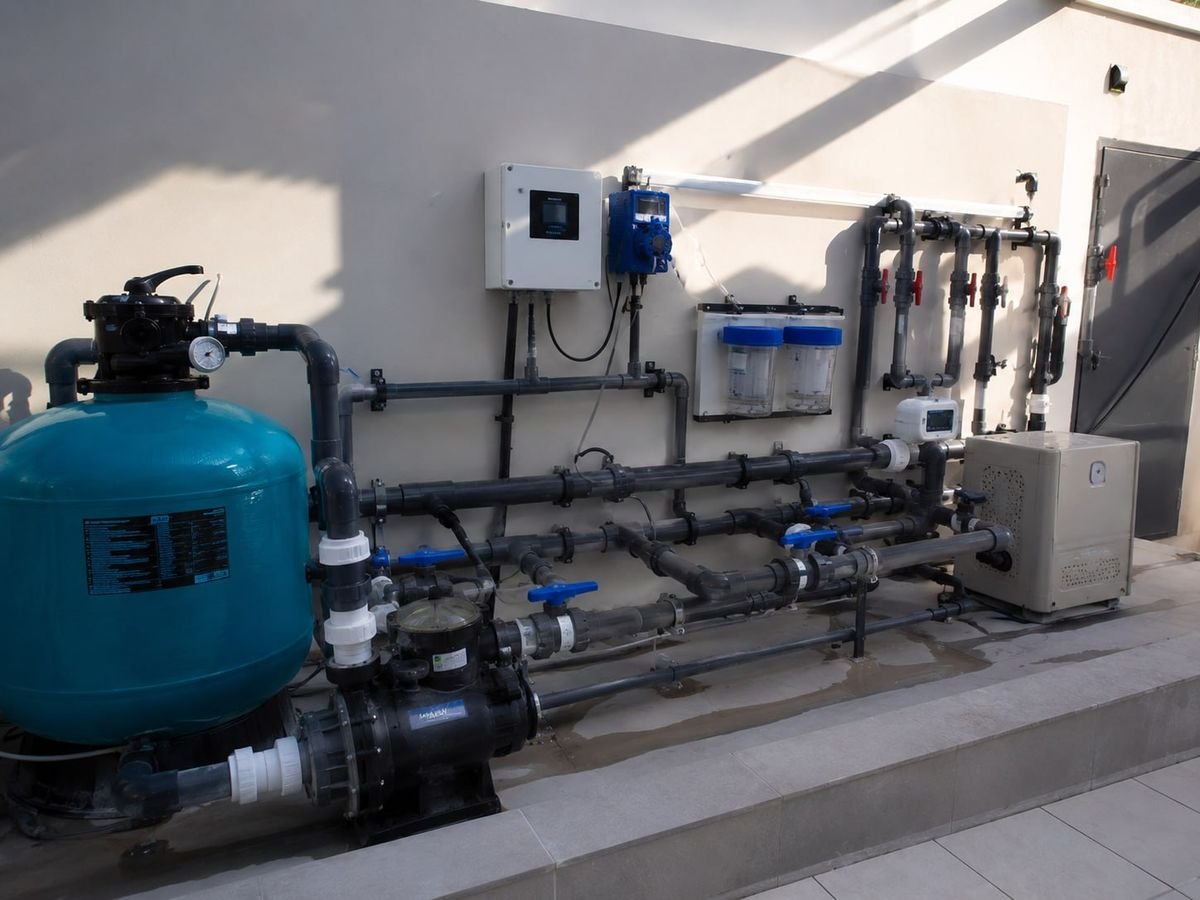
Step into the plant room
- Water on the floor or leak marks around pipes and valves.
- A loud, irregular or overheating pump.
- Filter pressure that climbs quickly after backwashing.
- Rust on metal parts or the electrical panel.
- Lights that fail or flicker, which need a qualified electrician.
Signs that show by season
- Summer raises evaporation, so a bucket test matters most, and long running hours expose a weak pump.
- After dust storms a weak filter shows clearly if the water takes very long to clear or needs repeated backwashing.
- Winter brings less evaporation, so a level drop at a similar pace is a stronger leak signal.
- After rain watch for pooling around the pool, water entering behind the coping, or new damp on nearby walls.
Repeat the walk-around two or three times a year and compare photos and notes each time.
Rank the signs by priority
| Priority | Signs | Action |
|---|---|---|
| Act quickly | Damp near electrics, rust from cracks, loose coping, sharp broken tiles, sinking deck | Stop use if there is a risk and book an inspection |
| Plan soon | Faster level drop, hollow tiles over an area, widening cracks, weak filtration | Request a site visit and a renovation plan |
| Monitor | Dirty grout, light deposits, a single cracked tile, seasonal algae | Regular maintenance and watching for change |
Is age a sign by itself?
Age alone is not a sign, but it raises the chance of several problems together. A well maintained old pool can be in better shape than a newer neglected one. If you do not know the maintenance history, or bought the villa with the pool, a full inspection is wise even with few signs. Many pools in older districts were built with materials and plumbing that need updating, as covered in renovating villa pools in older neighbourhoods.
After the walk-around
- Record everything with clear, dated photos.
- Run a bucket test if you suspect level loss.
- Avoid scattered repairs before you see the full picture.
- Book a site visit and share your notes.
- Ask for a written quotation separating essential and optional work.
YAM Pools starts with a site visit, explains in a written quotation which signs need renovation and which need only maintenance, and provides a written warranty on workmanship and waterproofing in cities across the Kingdom.
Frequently asked questions
Does one broken tile mean the pool needs renovation?
No, a single tile is usually a simple repair. If breakage is in several places or the surrounding tiles are hollow, a wider inspection is worthwhile.
How do I know the level drop is a leak and not evaporation?
Do a bucket test by placing a bucket of water on a step and comparing the drop inside and outside. If the pool drops clearly more, a leak is likely.
I bought a villa with an old pool. What should I do?
Have a full inspection before regular use, even if it looks fine, because the maintenance history is unknown. It gives you a clear list of priorities.
Does recurring algae mean renovation?
Not always, as better treatment and circulation often solve it. If it sits in cracks and worn grout, the finish may need renewing.