In this article
Many older and mid-aged Riyadh neighbourhoods have villas whose pools were built long ago with the materials and methods common at the time. These pools have served their owners well, but today many face a recurring problem: a leak appears, is repaired, then returns somewhere else. The owner feels stuck in a loop where every repair costs money without ending the problem.
The reason is that an old pool rarely has a single fault. It usually has general ageing across several layers at once, so it needs a different approach from a newer pool leaking for the first time. This article explains why old pools leak more, how old and modern materials differ, how to tell age is the cause, and how to make the repair a lasting one rather than a patch.
Why old pools are more prone to leaks
- Ageing waterproofing: every product has a service life. Over time it loses flexibility and adhesion and develops fine cracks.
- Accumulated structural movement: soil shifts slightly over the years and concrete goes through countless heat cycles, opening new cracks.
- Old pipework: some older pools used pipes or joints less durable than today's, which harden or break with soil movement or tree roots.
- Old-style fittings: older lights and returns were sometimes installed without dedicated sealing collars and become the weakest point in the wall.
- Accumulated earlier repairs: each local patch in a different product leaves boundaries that become extra weak points.
- Changed use: a stronger pump fitted to old pipes, for example, increases stress on joints.
Old vs modern waterproofing
| Aspect | Common older methods | Modern methods |
|---|---|---|
| Flexibility | Often rigid, cannot follow crack movement | Flexible within limits |
| Coats | One or few | Several, with reinforced corners and joints |
| Fittings | Ordinary sealant around parts | Dedicated collars for each fitting |
| Testing | Fill test not always done | Fill test before tiling is standard practice |
| Tile compatibility | May not suit modern adhesives | Integrated membrane, adhesive and grout systems |
Not every old pool was poorly waterproofed, and many were built with care. But even the best old material has a life, and a pool past it needs renewal, not repair.
Signs that age is the main cause
- The leak moves to a new place after each repair.
- Hollow or loose tiles spread gradually across several walls.
- Grout is eroded generally, not in one area.
- White deposits or rust stains come out of cracks.
- Lights and returns are old-style with cracked sealant.
- Pipe testing finds problems in more than one line.
- There is no clear record of the original waterproofing or its last renewal.
Restoring and waterproofing an old pool properly
- Full inspection first: bucket test, pipe pressure tests, tiles, fittings, concrete and surroundings, to find every leak source.
- Decide the scope: targeted repairs or full re-waterproofing.
- Planned draining with groundwater assessed and the team ready to start.
- Strip old finishes down to a sound surface.
- Repair concrete, treat any exposed or rusted rebar and level the surface.
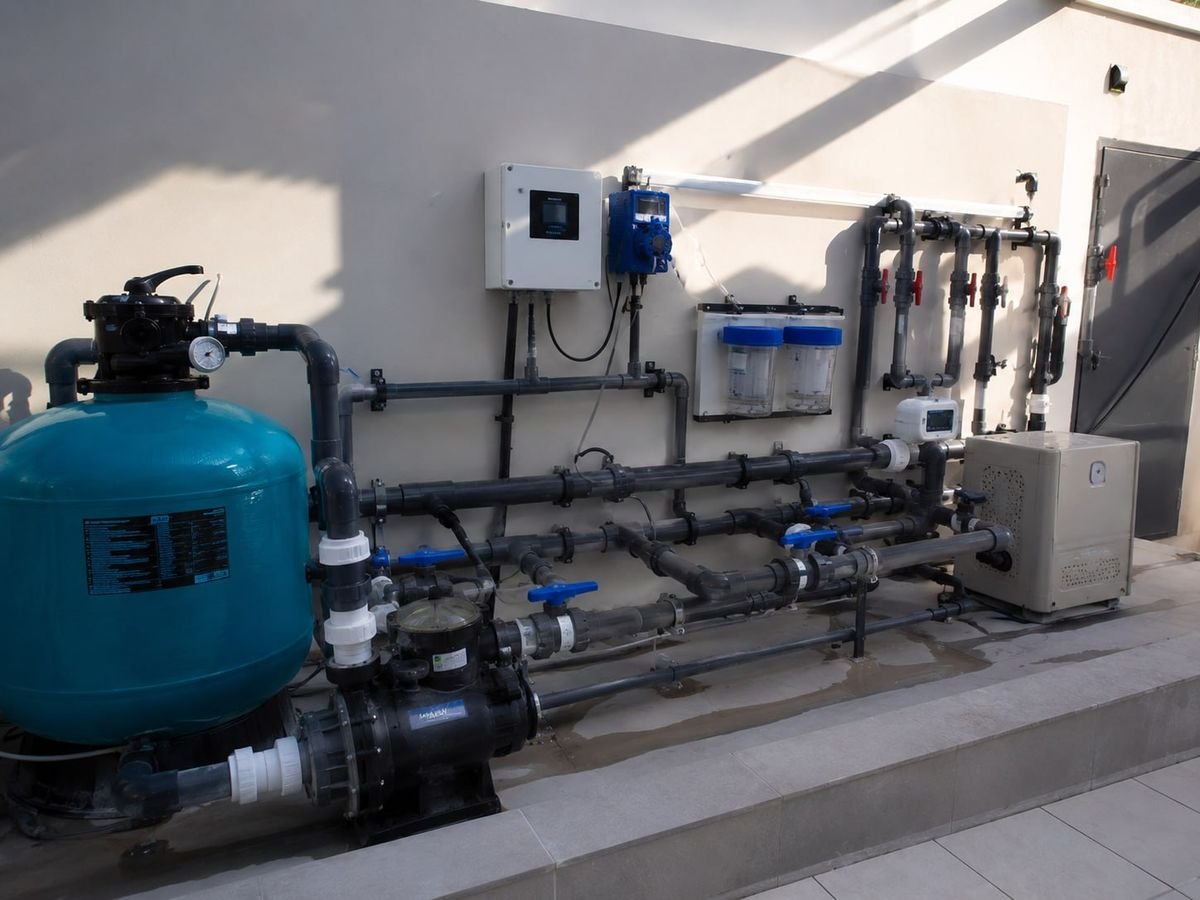
- Update fittings and internal pipes with modern parts and sealing collars.
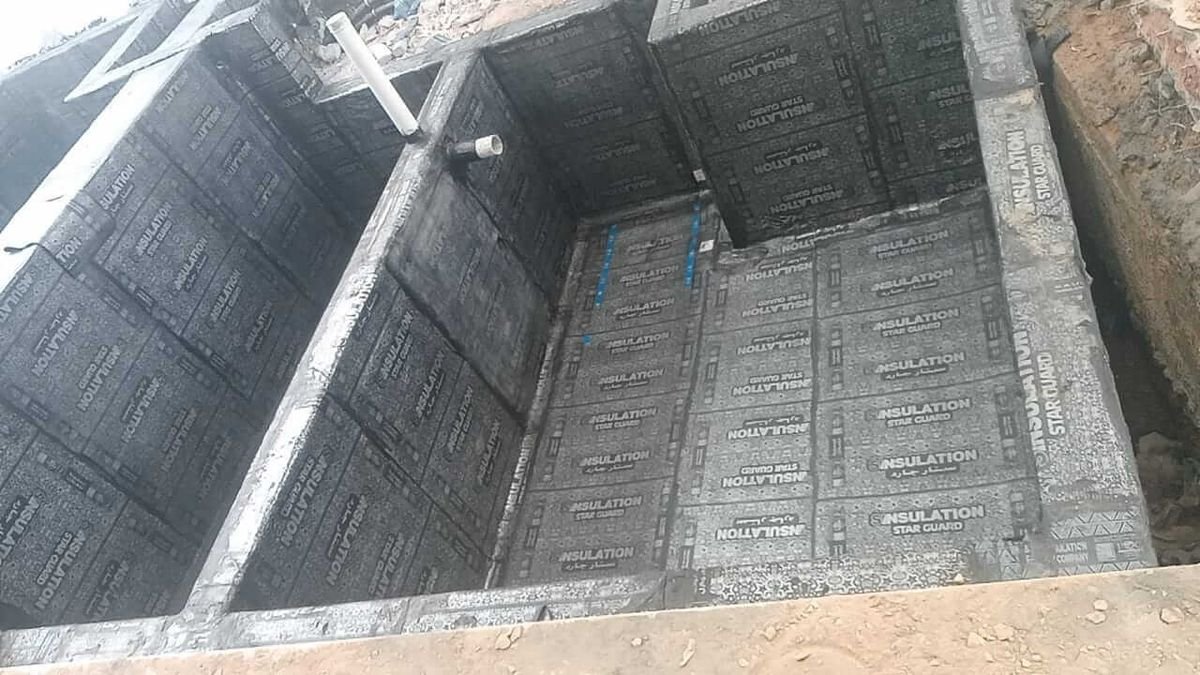
- Full multi-coat waterproofing with reinforced corners, joints and fittings.
- Fill test before finishing.
- New tiles and grout suited to heat and chlorine.
- Start-up: refill, gradual water balancing and equipment checks.
When full re-waterproofing beats partial repair
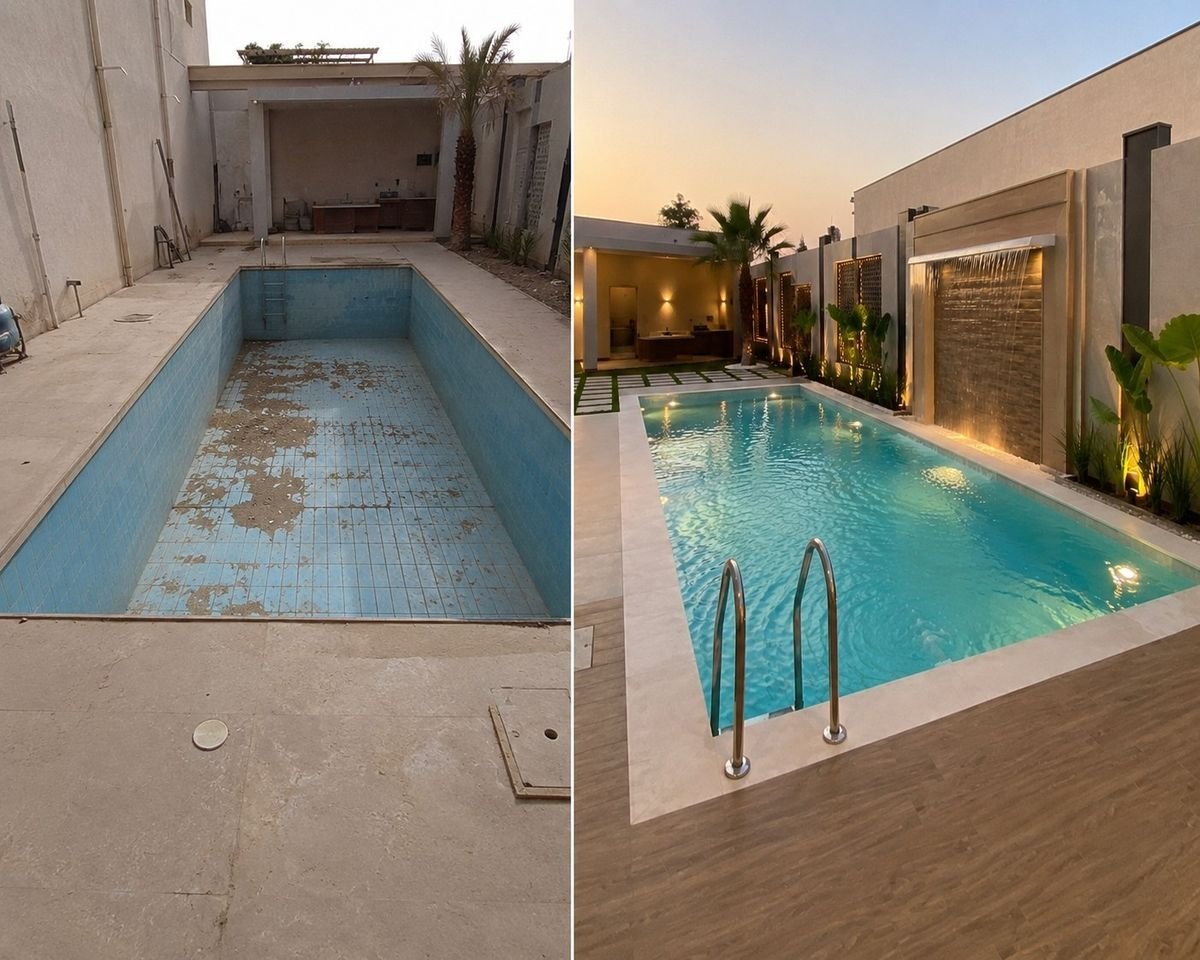
Partial repair suits an old pool when the leak is at one clear point, the rest of the waterproofing still works and tiles are firm. When ageing is general, partial repair fixes today what will show up tomorrow nearby. Full re-waterproofing ends the repair cycle and gives a fresh starting point, and the drained period is also a chance to update lighting and equipment. For more on this decision, read partial or full renovation for old pools.
Old pool renovation with YAM Pools
YAM Pools approaches an old pool with a full inspection of the shell, pipes, fittings and equipment, then provides a clear report of options and a detailed written quotation. We carry out the work under engineering supervision with a fill test before finishing and a written warranty on workmanship and waterproofing. We serve villas in Riyadh and across Saudi Arabia.
In short: an old pool that leaks again and again does not need another repair. It needs a full diagnosis and a clear decision.
Frequently asked questions
Does every old pool need full waterproofing?
No. Some old pools still have good waterproofing and need only a targeted repair. The decision is based on inspection, not age alone.
Can the look of the old pool be kept after renovation?
Yes in most cases, and you can also improve tiles and lighting during the same period if you wish.
Why does the leak come back after each repair?
Because the repair fixed one point while ageing affects the whole membrane, grout or pipes. The fix needs an inspection that finds every source.
Does the renovation include buried pipes?
If the inspection finds a problem in them, yes. We test pipes before draining so the work covers everything that needs repair.