In this article
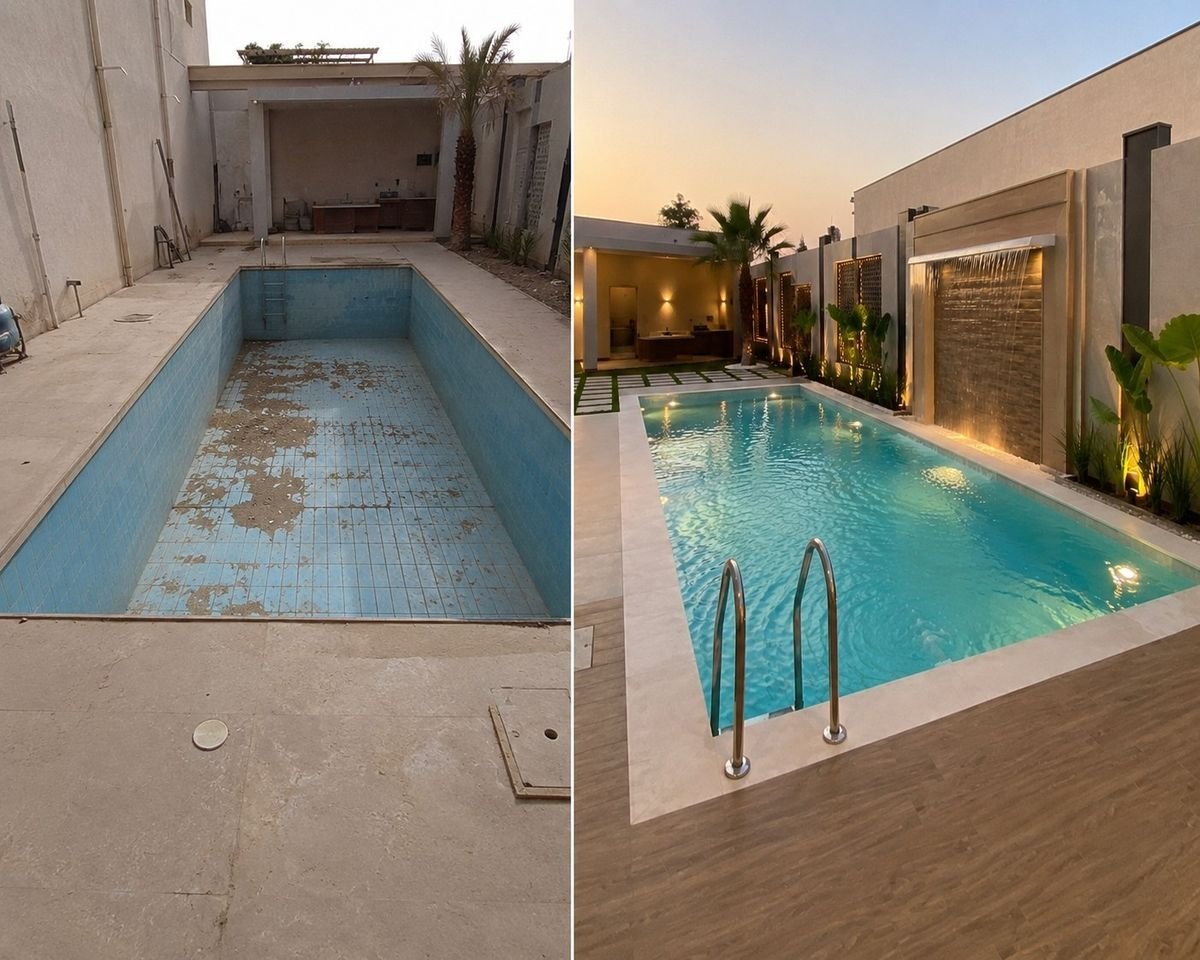
Tiles are the first thing you see in a pool, and they give the water its colour and feel. Over the years, tiles in older villa pools face harsh conditions, strong sun all year, chlorine, a rising and falling waterline, and dust settling in the joints. Wear is natural. But not every worn tile needs replacing, and not every retiling solves the problem.
This article focuses on the finish itself. When renewal is truly needed, when a simpler repair is enough, how to choose tiles and grout for Riyadh and other hot cities, and the details that make a finish last.
Full retiling or repair? Check first
| Observation | Usual solution |
|---|---|
| Dirty or dark grout, tiles sound | Deep cleaning and regrouting |
| Scale on tiles | Suitable cleaning and better water balance |
| Scattered broken tiles, rest sound | Local replacement, minding colour match |
| Hollow tiles over connected areas | Remove the area and check adhesive and waterproofing |
| Tiles falling in several places, or leaks with tile damage | Full refinish with waterproofing treatment |
| Sound but dated tiles | Refinish after checking the waterproofing |
Common finishes and when each fits
| Type | Strengths | Watch for |
|---|---|---|
| Pool porcelain | Low absorption, durable, many colours and sizes | Pool-rated, slip-resistant on steps and shallow floors |
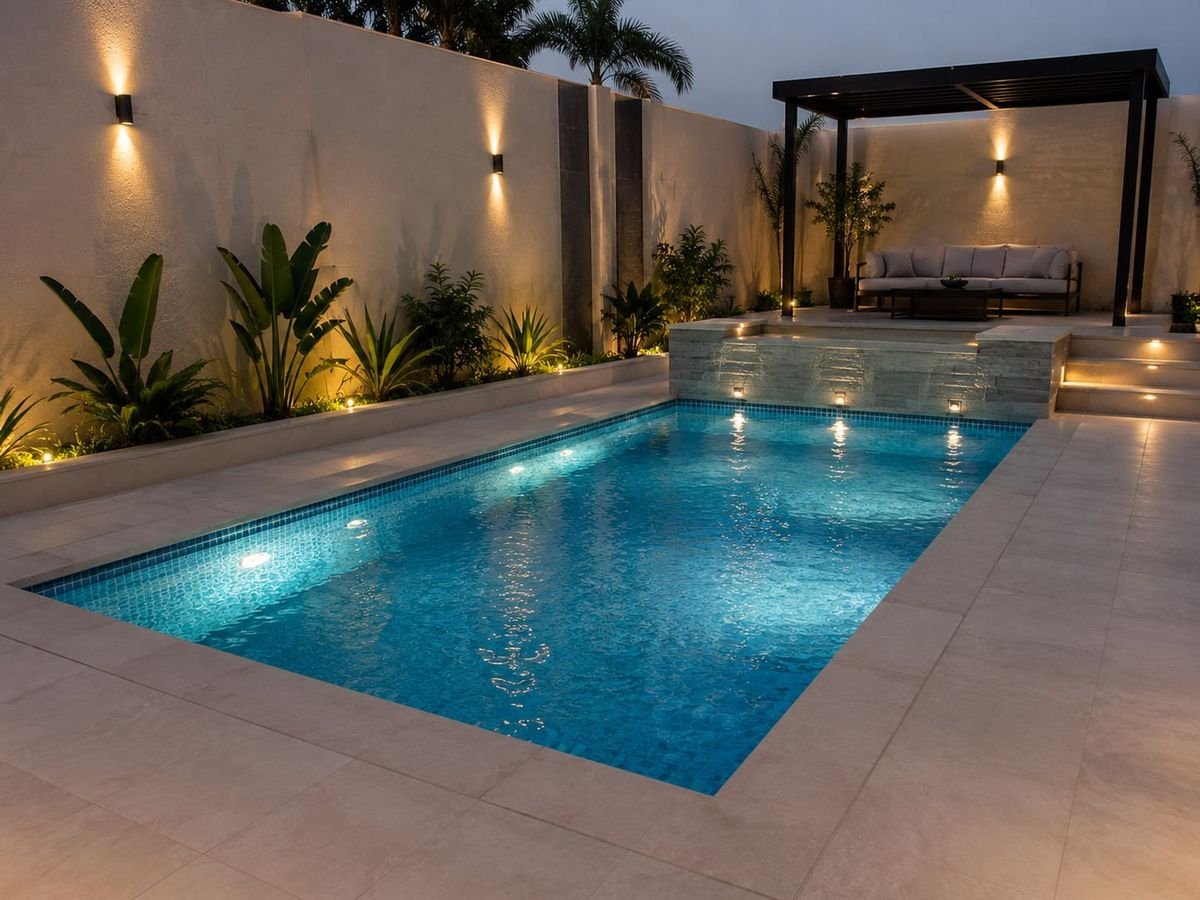
| Glass mosaic | Beautiful sparkle, non-absorbent, chlorine resistant, suits curves | Precise fixing, right adhesive, and grout choice matters |
| Small ceramic or porcelain mosaic | Follows corners and curves, wide colour range | Must be pool-rated and low absorption |
| Natural stone for coping and deck | Premium look and natural feel | Choose a type suited to heat and chlorinated water, with proper sealing |
Most pools combine types, such as porcelain for floor and walls, a mosaic band at the waterline and stone for coping. For heat effects, read pool tiles and Riyadh heat.
Adhesive and grout matter more than you think
- Adhesive must be rated for permanent immersion and flexible enough for thermal movement.
- Full coverage behind every tile, since voids collect water and start hollowness.
- Epoxy grout is often a strong choice, low absorption and resistant to chlorine, algae and stains, but needs a skilled installer.
- Improved cement grout can work in some cases but needs closer attention to water balance.
- Movement joints where needed, so large tiled areas do not crack with heat.
Refinishing steps
- Drain and document the old tiles and damage.
- Remove old tiles and adhesive carefully without harming the concrete.
- Check the surface and waterproofing and treat cracks or weak spots.
- Level the surface so tiles sit flat without voids.
- Plan the layout so cut pieces sit in less visible places.
- Fix tiles with pool adhesive and full coverage.
- Grout after the set time and clean off residue.
- Allow curing time before filling.
Waterline, steps and edges
- The waterline takes the most sun, wetting and scale, so glass mosaic or low-absorption tile makes cleaning easier.
- Steps must be slip resistant, ideally with a contrasting edge on each step for visibility, important for children and older family members.
- Coping should be smooth without sharp edges, in a material that does not overheat.
- Inside corners need precise cuts and tight grout, as algae gathers there first.
Colour, heat and how the water feels
Tile colour changes the water colour. Light whites and blues give clear, fresh water and absorb less heat, while dark colours give depth but absorb more heat and show scale. In Riyadh, owners wanting cooler summer water usually prefer light colours, especially on the floor, and light, low heat-absorbing coping and deck so feet are not burned at midday.
Before approving the new finish
- Get a real sample and place it in a bucket of water in the sun to see how the colour changes.
- Confirm it is rated for immersion and slip resistant on steps.
- Make sure the full quantity comes from one batch to avoid shade differences.
- Keep a few spare tiles for future repairs, since the same type may not be available later.
- Check the adhesive and grout named in the quotation, not only the tile.
Caring for new tiles
- Keep pH around 7.2 to 7.6, as acidic water attacks grout and alkaline water leaves scale.
- Clean the waterline regularly before scale builds.
- Use brushes suited to tiles and mosaic and avoid metal brushes.
- Report any hollow tile or crumbling joint early.
YAM Pools checks waterproofing and the surface before any new finish, helps you choose tiles and grout for your pool and city climate, and provides a written warranty on workmanship and waterproofing.
Frequently asked questions
Can new tiles go over the old ones?
Usually not recommended. Old tiles may be hollow or the waterproofing under them worn, and tiling over hides the problem and adds thickness. The right way is to remove the old tiles and check the surface.
Porcelain or glass mosaic, which is better?
Both work if they are pool-rated. Porcelain is practical and durable for large areas, while glass mosaic adds sparkle and suits the waterline and curves.
Why does grout turn dark so quickly?
Usually absorbent grout or unbalanced water that encourages algae and deposits. Resistant grout and balanced water reduce this a lot.
Will new tiles fix a leak?
No, tiles are not a waterproofing layer. A leak needs the waterproofing treated first, then the tiles go on.