In this article
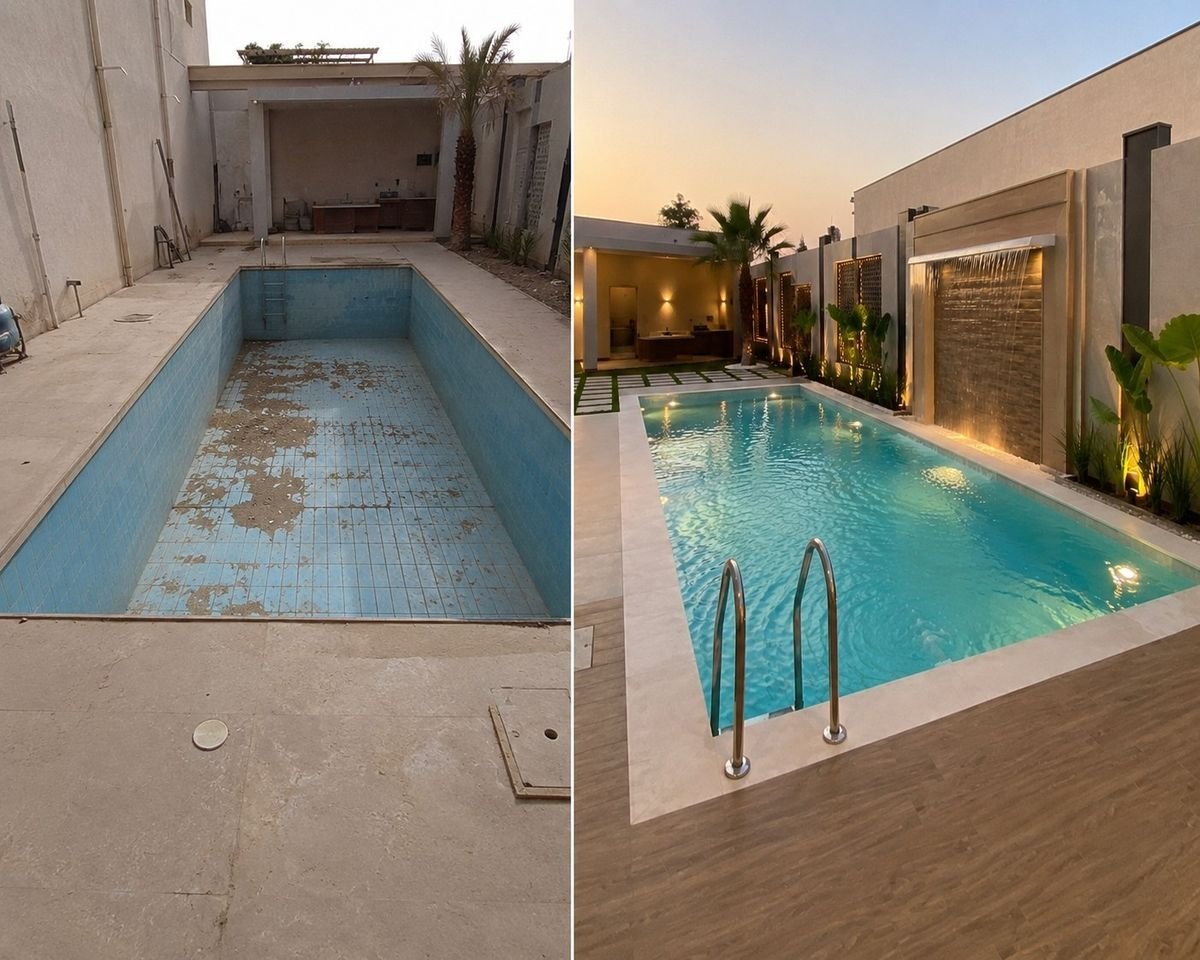
A full retile changes the look of a pool more than almost anything else, and it is also one of the most sensitive jobs. You are not just swapping a decorative layer; you are opening the pool down to the layer that protects the concrete. It cannot be done with water in the pool, and it needs a carefully planned full drain. This article covers when full retiling is the right decision, why draining is essential, how the stages run in order, and the precautions that protect an empty pool.
When is full retiling really needed?
Not every broken tile means a full retile. It makes sense when the problem is general. Clear signs include hollow-sounding tiles on several walls, tiles falling off repeatedly in different places, grout that crumbles or has discoloured across most of the pool, old tiles that are faded, rough or crazed and trap algae, a leak tied to the waterproofing beneath the tiles, or a wish to change the look entirely. If the problem is confined, a local repair without a full drain may be enough. The assessment depends on tapping and testing, not looking alone.
Why full retiling needs a complete drain
- Adhesive needs a dry surface: tile adhesive does not bond properly on wet or submerged surfaces, and weak bonding means tiles falling later.
- Access to waterproofing: once tiles come off, the waterproofing is exposed and often needs repair before retiling.
- Levelling: walls and floor need levelling and slope correction on a fully exposed surface.
- Curing time: waterproofing, adhesive and grout each need time to cure before water returns.
Precautions while the pool is empty
A concrete pool is designed to be full, and the weight of water balances pressure from the surrounding soil. When it is emptied, that balance changes. Where groundwater is high or soil holds moisture, pressure from below can affect an empty shell, so the site condition and any pressure relief valve must be checked. Drained water needs a suitable outlet, not the garden, the house foundations or the neighbours. Exposed concrete in summer needs protection from excessive drying, and the empty period should be as short and organised as possible, which means materials ready before starting. See safe pool draining steps before renovation.
Retiling steps after draining
- Drain and clean: remove water safely and clear sediment and algae.
- Remove old tiles: fully, along with old adhesive. No tiling over old tiles.
- Inspect the surface: cracks, weak areas, failed waterproofing and exposed steel become visible.
- Structural repairs: treat cracks or concrete deterioration before any new layer.
- Waterproofing: repair or renew as needed, with care at corners, fittings and lights.
- Fill test: where conditions allow, fill after waterproofing and watch the level before tiling.
- Level and tile: using adhesive rated for submerged use.
- Grout: chlorine and water-resistant pool grout, with excess cleaned off.
- Cure and refill: wait as the materials specify, refill gradually and balance the water.
Choosing tiles for the Saudi climate
| Type | Strengths | Watch for |
|---|---|---|
| Glass mosaic | Non-absorbent, stable colours, premium look | Needs precise installation and suitable adhesive |
| Pool-rated porcelain | Low absorption, many sizes, easy care | Slip-resistant finish on steps and edges |
| Standard ceramic | Widely available | Often unsuitable for permanent immersion |
Colour also affects temperature and appearance: light tones reflect more sun, dark tones look deeper but absorb more heat.
Common retiling mistakes
- Tiling over old tiles to save time.
- Using ordinary grout instead of pool grout.
- Refilling before grout has cured.
- Skipping the waterproofing check because the problem "looks cosmetic".
- Leaving out movement joints on large areas.
Summary
A full retile is a rare chance to inspect and repair waterproofing and concrete, because you will not easily reach them again. Do not waste it on a cosmetic change only. YAM Pools assesses tiles and waterproofing during the site visit and sets out stages and materials in a written quotation, with a written warranty on workmanship and waterproofing, in Riyadh and all Saudi cities.
Frequently asked questions
Can I replace some tiles without draining the pool?
For small repairs near the waterline, lowering the level may be enough. A full retile or deep areas require draining.
How long does a full pool retile take?
It depends on pool size, the condition of waterproofing and concrete after tile removal, and curing times. The contractor gives an approximate schedule after inspection and updates it after removal.
Is retiling a good chance to check waterproofing?
Yes, the best one, because the waterproofing is exposed once tiles are removed. We recommend checking and repairing it before new tiles go on.
Can draining damage the pool?
Done without assessing the site it can be risky, especially with groundwater. That is why draining follows a clear plan and is kept as short as possible.