In this article
Pool neglect is rarely one decision. It starts with a week when the water is not tested, then a filter not cleaned on time, then a strange pump noise put off, then a cracked tile left until there is time. Each step looks minor. The problem is that pool damage is connected, and every fault opens the door to the next. In Riyadh, heat, dust and a long swimming season speed this chain up. This article does not focus on one component. It draws the full picture: how damage moves from the water to the finish, from the finish to the waterproofing, and from equipment to structure, and how to stop it at the first link.
The damage chain
- Chlorine and pH are not adjusted regularly, so the water swings between acidic and alkaline.
- Acidic water slowly eats grout, while alkaline water deposits scale in the filter and pipes.
- Weak grout lets water behind the tiles, weakening the adhesive.
- Moisture behind tiles reaches the waterproofing and finds any weak point.
- Escaping water reaches concrete and reinforcement, starting rust and cracking.
- Meanwhile, a clogged filter makes the pump work harder, so it overheats and wears out sooner.
All of this can start from a simple habit of testing the water tomorrow.
Stage one: the water
- Slight cloudiness or a green tint in corners.
- A strong chlorine smell and red eyes.
- Rising chemical use without clear results.
- A thin slimy layer on the steps.
Caught here, the fix is usually balancing the chemistry, a thorough clean and regular filtration. Cost and effort are at their lowest.
Stage two: finishes and grout
- Grout crumbling, discoloured or leaving gaps.
- Black algae rooted in the joints.
- Hard white scale along the waterline.
- Faded paint or chalky plaster.
- Tiles that sound hollow when tapped or come loose.
Repairs now take more work, such as regrouting sections or replacing tiles, sometimes with partial or full draining.
Stage three: equipment and systems
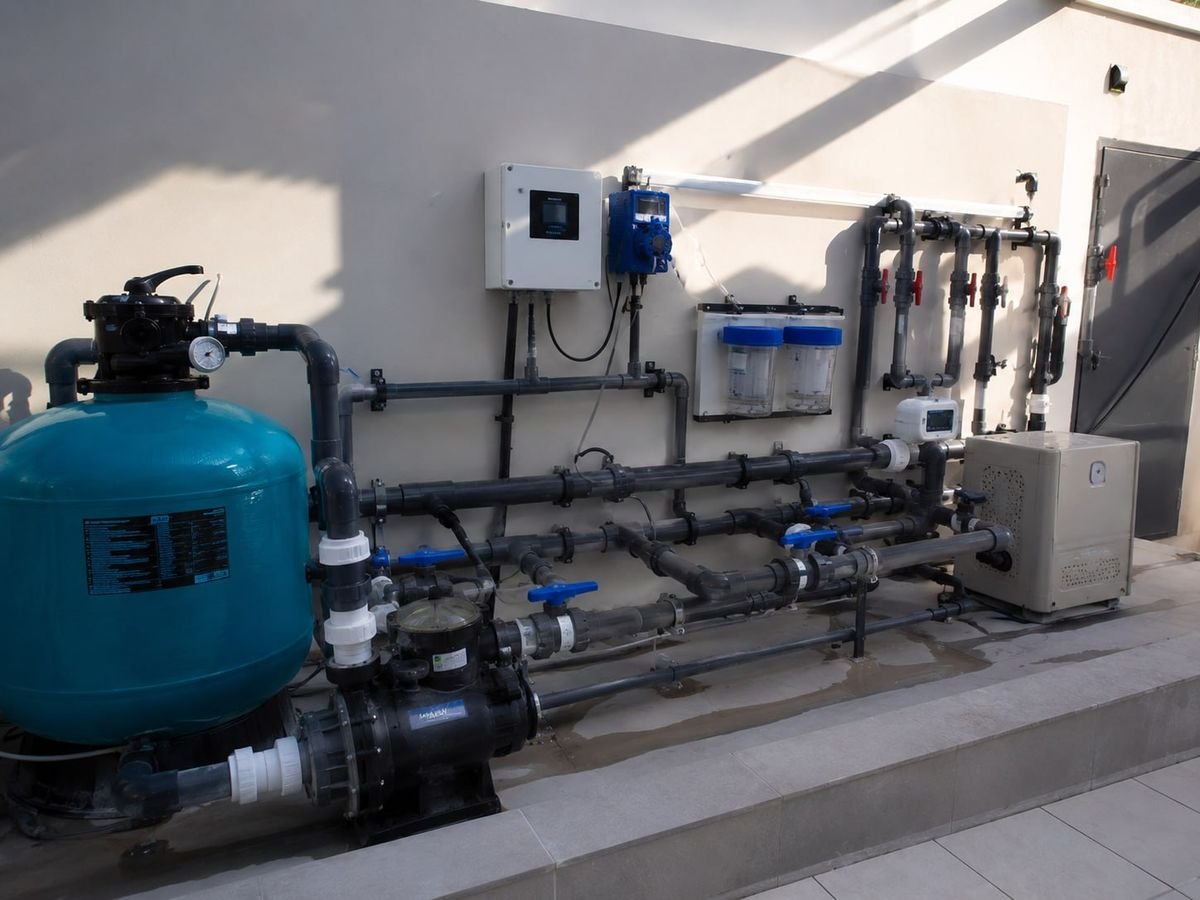
- Pump: struggles against a full basket or clogged filter, overheats and its seals start to leak.
- Filter: sand clumps or cartridges tear, letting dirt back into the pool.
- Heater or chiller if fitted: scale reduces heat exchanger efficiency.
- Lighting: old seals let water into fittings, which is an electrical hazard.
- Metals: ladders, screws and anchors rust and stain the tiles.
For details on the pump and filter, read damage from neglecting the pool pump and filter.
Stage four: waterproofing and structure
- Water level dropping faster than normal evaporation.
- Damp or efflorescence on nearby walls or in the plant room.
- Cracks in the pool shell or surrounding deck.
- Rust stains coming through the concrete.
- Settling or tilting of the deck around the pool.
At this stage an engineering inspection is needed to find the leak source and assess the concrete, usually followed by renovation of waterproofing and finishes together.
What speeds up damage in Riyadh
- Heat burns off chlorine, speeds algae growth and overheats equipment in closed rooms.
- Dust and sandstorms fill the filter quickly, feed algae and shift water chemistry.
- High evaporation concentrates minerals and accelerates scale.
- Seasonal pools left idle all winter and restarted suddenly in summer face every problem at once.
How to stop the chain
- A fixed weekly routine: test chlorine and pH, empty skimmer and pump baskets, brush walls and steps, vacuum the floor.
- Watch the filter gauge and backwash by the reading, not by memory.
- Monitor the water level and notice if it drops faster than usual.
- A monthly walk-round: grout, tiles, lights, ladder and plant room.
- A professional check once or twice a year, especially before summer.
- Fix small faults at once, such as a broken tile or a leaking seal.
If you do not have time for this routine, a maintenance contract hands it to a specialist team and keeps it regular even while you travel.
Summary
- Neglect is a chain that starts with the water and ends with the structure.
- Each stage is harder and costlier than the last.
- Riyadh heat and dust speed the chain up.
- A simple, regular routine beats late repairs.
- An abnormal level drop or cracks need inspection straight away.
Frequently asked questions
What is the first sign that neglect is damaging my pool?
Usually a change in the water itself, such as slight cloudiness, a strong smell, red eyes or slime on the steps. This is the easiest stage to fix.
Can neglect really reach the concrete structure?
Yes. Unbalanced water weakens grout, moisture reaches the waterproofing and then the concrete and steel, causing rust and cracking over time.
How do I know my pool needs renovation?
An abnormal level drop, cracks, large areas of loose tiles or damp around the pool are signs that call for an engineering inspection to define the work.
Does a maintenance contract replace my own checks?
It covers the regular technical work, but your daily notice of water level, colour and unusual noises helps the team spot problems early.