
In this article
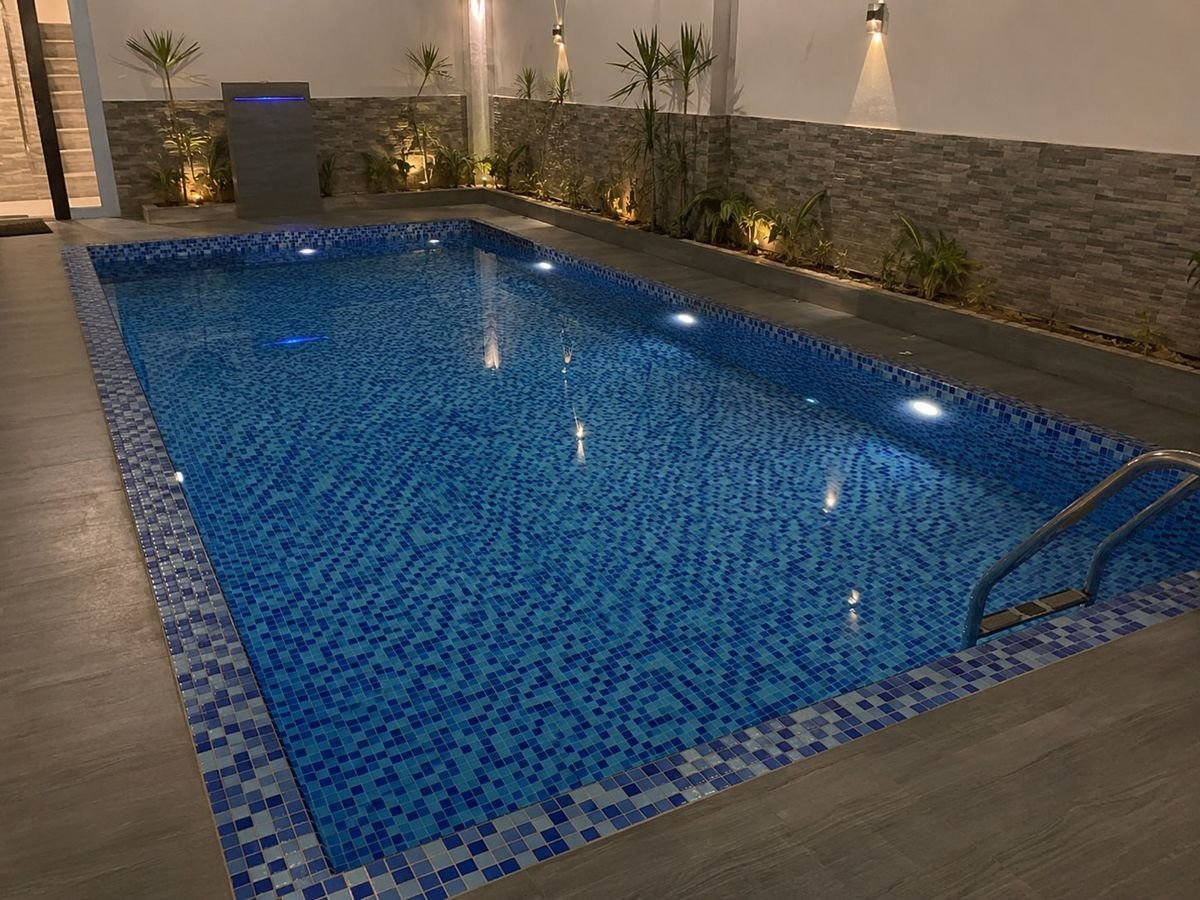
Retiling is the most visible part of a pool renovation. It changes the whole look and gives the pool new life, so colour and pattern get plenty of attention. But pool tiles are not just decoration. They form a surface children and adults walk on barefoot, a layer protecting the waterproofing from water and chlorine, and part of the drainage around the pool. Retiled the wrong way, problems appear as slips, fallen tiles, standing water or leaks. This article focuses on retiling mistakes and the right alternative for each.
Tiles and swimmer safety
Most minor injuries around pools come from slipping on steps, edges or wet decks. Tile type, surface and installation are central to this. Very glossy tiles look great in photos but are dangerous when wet. Sharp edges or tiles slightly proud of their neighbours can cut feet, and decks where water pools become slippery and gather dirt and algae. Tile decisions should start with safety before looks, especially when children use the pool. Today many options combine an attractive look with a safe surface.
Laying new tiles directly over old ones
This is tempting because it saves removal time and cost, but it has consequences.
- Old tiles may be hollow in places, and new tiles above will fall with them.
- The waterproofing is never checked, so a spent membrane stays hidden under two layers.
- Bonding to a smooth surface such as old glazed tile is far weaker than to a prepared base.
- Levels change, affecting the waterline, skimmer, fittings and steps.
- Extra load on the structure and layers.
The right approach is removing old tiles and adhesive down to a sound surface, checking and treating the waterproofing, then tiling. It takes longer but is the only route to a lasting result.
Choosing tiles that are not slip resistant
| Area | What it needs |
|---|---|
| Steps inside the pool | Slip-resistant surface with a clear edge on each step |
| Shallow and children's areas | Slip-resistant, comfortable underfoot |
| Pool edge | Safe when wet, with rounded edges |
| Surrounding deck | Slip-resistant and not too hot in the sun |
| Submerged walls | Pool-rated, easy to clean |
In Riyadh, heat adds to slip resistance as a factor, since some deck tiles and stones get very hot at midday. Light colours and materials that hold less heat make the pool more comfortable.
Ignoring falls during installation
Water must know where to go. Decks need planned falls that carry water away from the pool to drainage points, or into an overflow channel where one exists. Ignore them when retiling and water ponds, runs back into the pool carrying dust, or seeps at the joint between pool and deck.
- Make sure deck falls lead water away from the edge and walls.
- Keep drainage and overflow channels open and not blocked by new tiles.
- Leave a flexible movement joint between pool edge and deck.
- Infinity edges and overflow channels need very precise levels.
Using the wrong adhesive or grout
Excellent tiles fail with ordinary adhesive. Pool adhesive works permanently underwater, faces chlorine and temperature change, and must suit the waterproofing beneath. Grout is the part most exposed to water, and if it is not chlorine resistant it erodes and lets water behind the tiles.
- Adhesive rated for submerged use and compatible with the waterproofing.
- Full coverage under each tile with no air pockets.
- Chlorine and water resistant grout, such as epoxy in many cases.
- Flexible movement joints at corners, the waterline and across large areas.
- Enough curing time before refilling.
For more on tile types and heat, read pool tiles and Riyadh heat.
The correct retiling steps
- Inspect first the old tiles, waterproofing and pipes.
- Choose tiles by area, safety and heat, not colour alone.
- Remove old tiles and adhesive to a sound surface.
- Treat cracks and waterproofing before tiling.
- Set levels and falls at the waterline, steps and deck.
- Tile with pool-rated adhesive and full coverage.
- Grout and movement joints with suitable materials.
- Cure, refill and monitor the tiles in the first weeks.
YAM Pools carries out retiling within a clear renovation plan, starting with a free site visit and inspection, then a written quotation naming tile, adhesive and grout, with engineering supervision and a written warranty on workmanship and waterproofing. We serve Riyadh and all Saudi cities. See our retiling service.
Frequently asked questions
Can new tiles be laid over old ones?
Not recommended in pools. Old tiles may be hollow, the waterproofing goes unchecked and bonding to a smooth surface is weak. Removal and inspection is the right way.
What tile is best for pool steps?
Pool-rated tile with a slip-resistant surface and a clear edge on each step so it is visible underwater.
Why does water pond on the pool deck?
Usually because of incorrect falls or blocked drainage channels. Falls should carry water away from the pool to drainage points.
Do pool tiles need special grout?
Yes. Ordinary grout erodes with chlorine and water. Use grout rated for submerged areas, chlorine resistant and compatible with the adhesive.