In this article
- Choosing cheap waterproofing to cut cost
- Using ordinary indoor tiles instead of pool tiles
- Ignoring thermal movement in concrete and reinforcement
- Using metals that rust
- Economising on pipes and equipment
- Skipping the site study before choosing materials
- How to choose materials that last
- Frequently asked questions
When building a new pool, most villa owners focus on shape, size and lighting, which is natural. Yet a pool's real lifespan is decided by materials you never see once construction ends, such as the waterproofing under the tiles, the concrete, the buried pipes and small metal fittings. In Riyadh, with strong sun, dry air and noticeable day to night swings in some seasons, material mistakes show up sooner and more clearly. This article covers the most common mistakes, why they happen and the right alternative for each.
Choosing cheap waterproofing to cut cost
Waterproofing keeps water away from the concrete and soil, and it is tempting to economise on it because it disappears under the tiles. Unsuitable waterproofing does not fail on day one but after a period of use, when repair means removing all the tiles. Typical mistakes are using roof or bathroom products instead of systems for permanently submerged areas, applying a single coat, or skipping reinforcement at corners and fittings. The right choice is a pool-specific system, flexible enough for thermal movement, chlorine resistant and compatible with the adhesive and tiles above it.
Using ordinary indoor tiles instead of pool tiles
A tile that looks great in a showroom is not necessarily right for a pool. Ordinary indoor tiles may absorb too much water, discolour or debond under chlorine, and can be too smooth for steps and shallow areas.
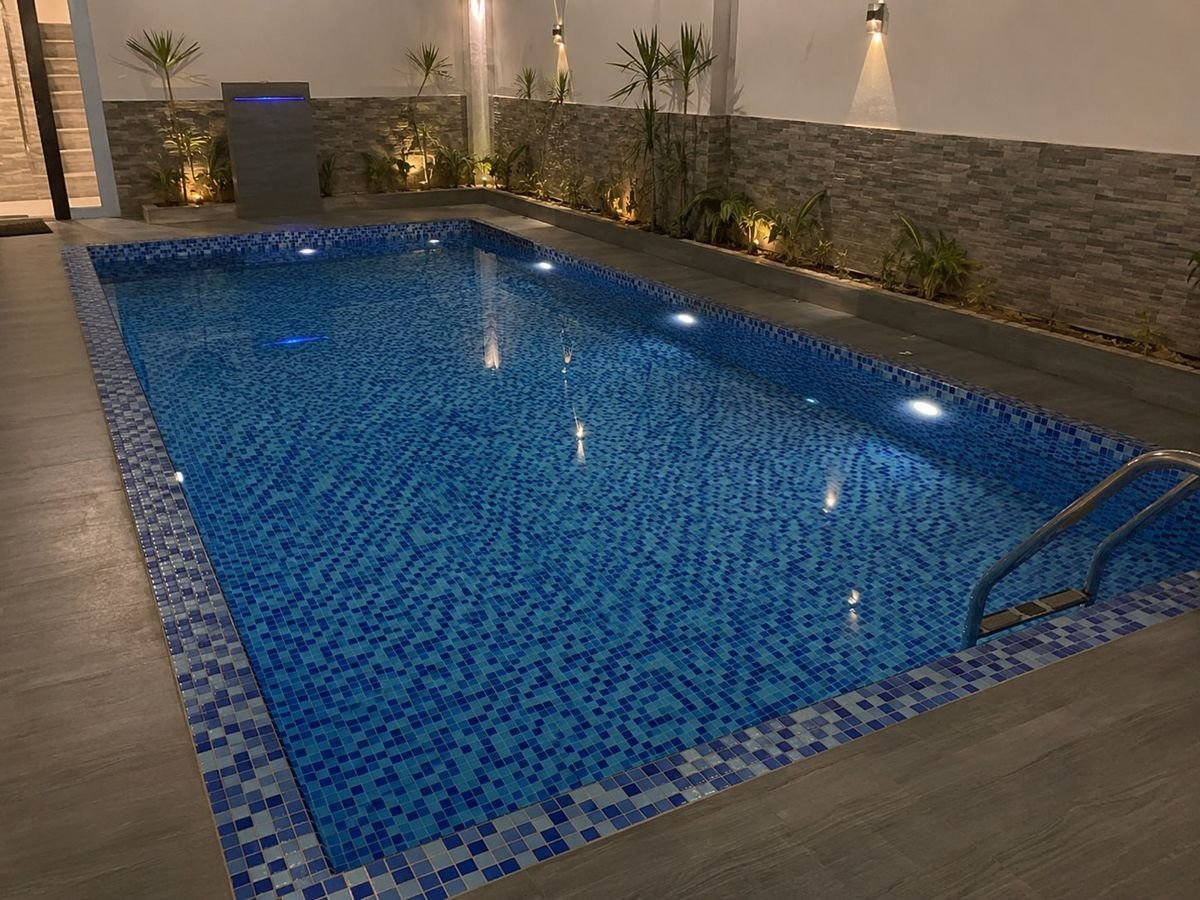
- Choose pool-rated tiles with low absorption, such as porcelain, glass mosaic or immersion-suitable ceramic.
- Check slip resistance on steps, shallow zones and decks.
- Think about colour, since very dark tones in exposed areas absorb more heat.
- Match adhesive and grout, because excellent tiles with ordinary adhesive will still fail.
The same applies to decks, where some stones and tiles get very hot at midday. Compare options in natural stone versus tiles for pool decks.
Ignoring thermal movement in concrete and reinforcement
- An unsuitable mix without enough density and water resistance.
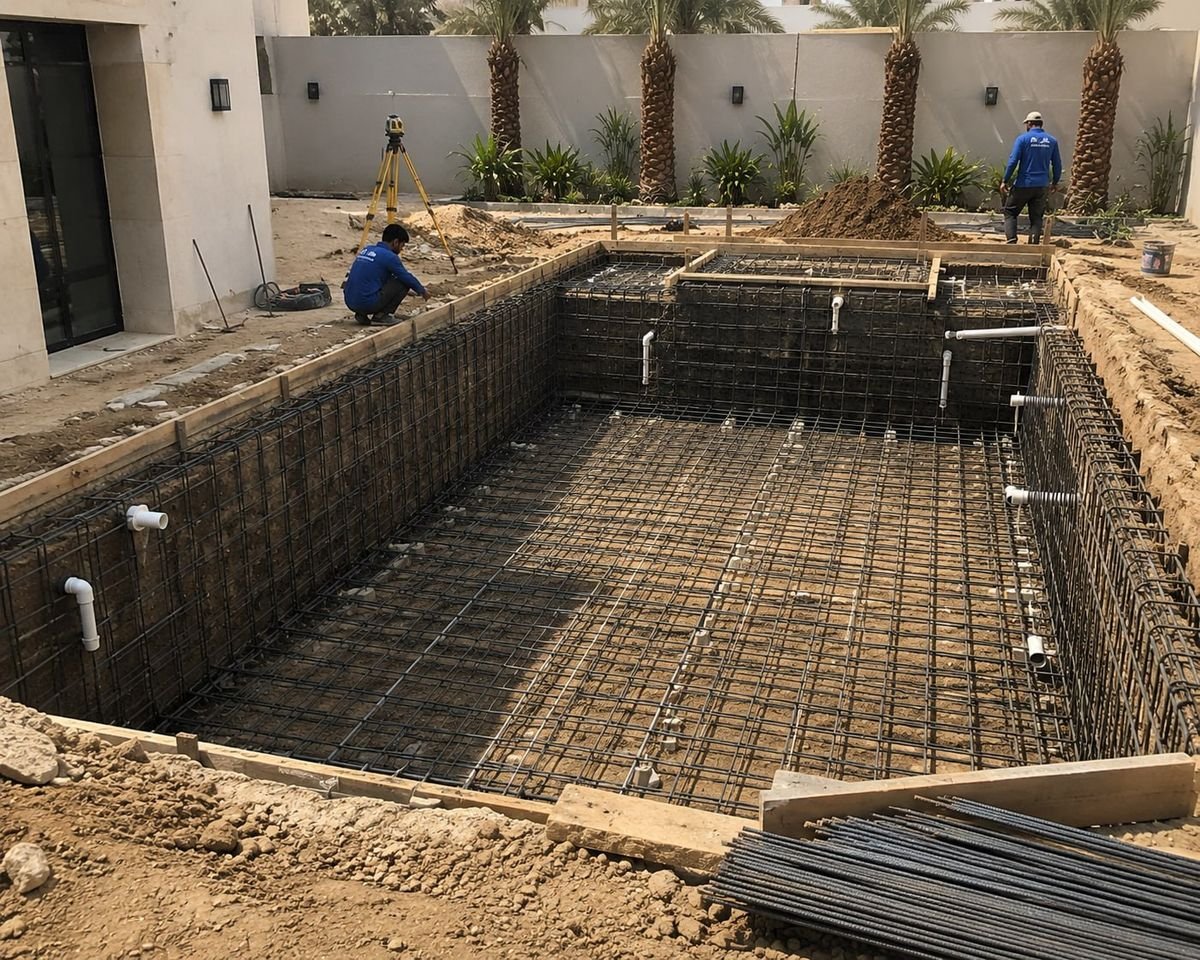
- Too little concrete cover over the steel, letting moisture reach it and start corrosion.
- Poor curing, as concrete drying fast in the sun without enough moisture cracks.
- Missing expansion joints between pool and deck, passing movement into the shell.
- Pouring in peak heat without precautions, weakening the outer layer.
The alternative is a structural design that respects the soil and climate, a suitable mix, supervised pouring and curing, and joints in the right places.
Using metals that rust
Ladders, handrails, covers, light rings and small screws all sit in chlorinated water, and in some pools salt water. Unsuitable metal rusts, stains tiles brown and can weaken into a safety risk.
- Choose a stainless steel grade suited to pool environments, not any shiny metal.
- Make sure screws and small parts match that quality.
- Avoid mixing different metals in contact without isolation.
Read more in stainless steel pool fittings.
Economising on pipes and equipment
Buried pipes are among the hardest parts to repair, lying under decks and gardens. Pipes not rated for pressure, weak joints or unprotected runs mean any later leak requires digging. In the plant room, a pump that does not suit the pool or an undersized filter raises pressure on the whole system. Use pool-rated pipes of the right diameter, carefully made joints, a pressure test before backfilling, and equipment sized for volume and pipe length, in a shaded, ventilated plant room.
Skipping the site study before choosing materials
Materials are chosen for the site, not just from a catalogue. Soil type, groundwater, sun direction, available space and how the pool will be used all matter. A site with shallow groundwater needs special attention to external waterproofing and design, while a fully exposed pool needs thought about tile colour and shade. Skipping this means choosing materials that may be excellent elsewhere but wrong for your site. YAM Pools starts every project with a site visit and study. You can also compare shell types in concrete or fibreglass.
How to choose materials that last
- Start with a site study of soil and sun.
- Specify a pool waterproofing system in writing.
- Choose immersion-rated tiles, slip resistant where needed.
- Get the concrete right in mix, cover, curing and joints.
- Use suitable stainless steel for all metal parts.
- Do not economise on pipes and insist on a pressure test before backfilling.
- Ask for engineering supervision at critical stages.
YAM Pools offers advice on materials for your site, a written quotation naming every material, engineering supervision and a written warranty on workmanship and waterproofing, across Riyadh and all Saudi cities. Learn more about our pool construction service.
Frequently asked questions
Which material should never be economised on?
Waterproofing and buried pipes. Both disappear after construction, and fixing them later means removing tiles or digging, which costs far more than choosing them well from the start.
Can bathroom tiles be used in a pool?
Usually not. Pool tiles must have low absorption, resist chlorine and be slip resistant where needed, and many indoor tiles do not meet that.
Why do rust stains appear on pool tiles?
Usually from metal parts that are not corrosion resistant, such as screws or covers. Stainless steel suited to pools prevents this.
Does tile colour affect water temperature?
Yes. Dark colours in exposed areas absorb more heat, while light and medium tones help reduce heat gain in summer.